
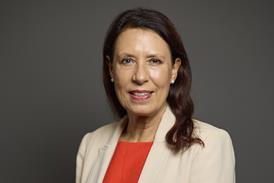










Roberto Marrocco of the Association of British Insurers (ABI) looks at the easy wins for the Pensions Commission, and the harder questions it faces.

Automatic enrolment is rightly celebrated as one of the UK’s biggest public policy successes. Over the past two decades, more than 11 million people have been brought into workplace pension saving, transforming retirement planning for a generation of workers.
Today, it’s becoming increasingly clear that the parameters of the current framework may not deliver the outcomes that workers expect. The Pensions Commission’s interim report reinforces the consensus that private pension saving needs to increase. The current minimum contribution rate of 8% was the right place to start, but it must evolve to meet the needs of tomorrow’s pensioners.
How can we improve saving levels?
At the ABI, we recently commissioned research by the Pensions Policy Institute (PPI) that showed increasing minimum auto-enrolment contributions to 12% could boost a median earner’s pension pot by around 50% over the course of their working life. That is a significant improvement in retirement prospects and one that policymakers cannot afford to ignore.
But how can we get there? Households continue to face cost-of-living pressures, while employers are managing rising costs of their own. Any reforms must therefore be gradual, predictable and carefully phased, learning from the success of the first Pensions Commission.
We need a long-term roadmap showing how minimum contribution rates could rise to 12% by the end of the 2030s, with the employer and employee each contributing 6%. Setting a clear direction of travel would give employers and employees s time to adapt while allowing changes to be phased in responsibly over time.
Alongside higher contributions, there is a strong case for implementing the reforms that parliament has already legislated, including lowering the age for auto-enrolment to 16 and removing the lower earnings limit so that people save from the first pound they earn. These reforms will also help to tackle the gender pension gap. Additionally, updating the upper earnings limit would ensure pension contributions keep pace with earnings growth.
Saving for a new society
We must also recognise that the assumptions underpinning our understanding of retirement adequacy are changing.

For generations, retirement planning has been built around the expectation that people would own their home outright by the time they stop working. Increasingly, that assumption no longer holds.
Our research with the PPI predicts that by 2044, one in three pensioner households will be renting, with nearly two million more people retiring without owning their home. This increase is largely fuelled by private renters, with the number of people renting privately expected to triple over this period.
This has a huge impact on how much money people need for an adequate retirement. Rent can cost up to £400,000 over a person’s retirement, often exceeding the total value of their private pension savings.
At the same time, more people are living alone in older age, meaning housing and household costs cannot be shared. Women in particular are at risk of under-saving, often entering later life with substantially smaller pension savings than men. The research also found that women’s financial resilience is disproportionately impacted by divorce or bereavement.
Savings must evolve to reflect the realities of modern society. A pension pot that may once have delivered an adequate retirement could prove insufficient when combined with increased housing costs and changing household circumstances.
That is why the debate about pension adequacy has become so important. Improving retirement outcomes will require consensus around solutions that are adequate, fair, and sustainable for all three parts of the system – the state, employers and individuals.
Auto-enrolment has given us strong foundations. The challenge now is ensuring the system evolves to meet the realities of modern retirement and give future generations financial security.
Roberto Marrocco is a senior policy adviser for long-term savings at the Association of British Insurers.