
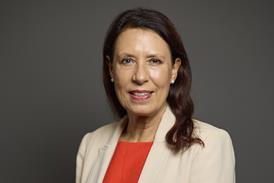










Paul Sweeting of the Institute and Faculty of Actuaries introduces new research that explains why it is critical that the industry works together to get guided retirement solutions right.

Fourteen years ago, automatic enrolment transformed retirement saving. It did this not by turning millions of people into financial experts, but by making the path of least resistance a favourable one.
Even if current contribution rates could be higher, it stands as one of the great successes of behavioural finance applied to a policy issue, by designing a system that works with human nature rather than against it.
The Pension Schemes Act 2026 heralds the start of another cycle of reform through the introduction of guided retirement. This asks trustees to bring order: to provide default solutions that convert savings into an income for life unless the member chooses otherwise.
The vital role of guided retirement
The big challenge with guided retirement is that different people have different needs. Appropriate outcomes are dependent on an individual’s health, housing, household circumstances, and range of other factors. Furthermore, these needs are likely to change over a retirement that could last thirty years or more.
“Getting [guided retirement] right is not a technical exercise but a public interest obligation. The public have been handed risks and responsibilities the system never equipped them to adequately understand and carry.”
Paul Sweeting, Institute and Faculty of Actuaries
A decade of pension freedoms has shown what can happen when individuals are faced with complexity without guidance or guardrails, and the results are not good: in 2025, the Institute and Faculty of Actuaries’ (IFoA) research revealed that 43% of savers aged 55 and over took no professional guidance when accessing their retirement pots, despite 24% being worried about running out of money in retirement.

This is why the IFoA commissioned the Behavioural Insights Team – experts in ‘nudge theory’ and the integration of understanding human behaviour in public policy, programmes and products – to produce a report looking at how guided retirement could work in the real world.
The need for this work is clear: systems design must be grounded in how people will think and act, not how policymakers hope they will respond.
We share a conviction that systems design and member behaviour cannot be considered separately, and that getting it right is not a technical exercise but a public interest obligation. The public have been handed risks and responsibilities the system never equipped them to adequately understand and carry.
Getting guided retirement right
Guided retirement gives policymakers, regulators, trustees and providers a rare opportunity to come together around a shared goal to act now for the public benefit: designing a more supportive retirement system that reflects how people make decisions and delivers better outcomes.

The resulting report, ‘Defined contribution guided retirement – a behavioural perspective’, is offered in that spirit: practical, evidence-led, and focused on implementation.
It reviews four broad designs of retirement options and considers how each of them makes implicit bets about how members will behave. Each design is also stress-tested against existing evidence.
The central finding is that any design element requiring active member engagement in later life is at serious risk of not being acted upon.
The report recommends that defaults should be designed so that the do-nothing path leads to a defensible outcome at every age. It also advocates that communications should be framed around income rather than pot size and tested rather than assumed to work.
Collaboration is key
Without safe harbours for well-evidenced defaults, the trustee dilemma will resolve itself by default towards flexibility. This option can feel the safest one to trustees, but is often the riskiest for the members, who are frequently ill-equipped to use it.
While the responsibility to find appropriate default solutions lies with trustees, it is important that all stakeholders are involved in shaping the design of guided retirement if it is to deliver a public interest solution to a complex challenge.
Actuarial expertise is trusted to design solutions that are financially sound; behavioural science can tell us whether members will use them as intended. Both agree on a fundamental premise: if we do not look at how people actually behave, we could miss a golden opportunity to transform the retirement outcomes for millions.
Paul Sweeting is president of the Institute and Faculty of Actuaries.