









Technology is confidently - but often wrongly - answering pensions questions, meaning individuals should secure proper advice while schemes develop their own tools.
It can be tempting to expedite the complexity of pension decisions with AI, but scheme members need to ensure there’s still a “human in the loop” before blindly following its advice.
As Artificial Intelligence, or AI, becomes increasingly ubiquitous in our lives, a growing body of research suggests that members are turning to tools such as Chat GPT, Claude, Anthropic or Copilot to support the rationale for their prospective retirement choices.
But besides the risk that AI tools can confidently give the wrong answer, members might also be opening themselves up to data breaches and cyber attacks by feeding general purpose AI tools their information.
If trustees or providers are to combat this, then time, money, and effort into various initiatives may be required; in the short-term, this could be towards communication campaigns warning of the dangers of using AI for financial advice, while in the long-term, it could be to provide an in-house AI-driven service for members.
And zooming out even more, there’s the role of regulators and national policymakers, whose efforts around AI awareness campaigns have been noted by industry experts, but perhaps need to be more joined up.
High alert
The simplicity and ease with which AI seemingly provides answers that appear to be based on verified knowledge is creating a conundrum for schemes.
Insiders state there is a growing awareness that AI is being relied upon to inform decisions, and so are trying to ensure members seek advice from a qualified professional.
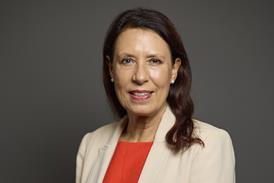
“It’s something we need to be alert to,” said Elizabeth Storey, head of pensions at RSM.
“We need to consider whether members are using information they have got from AI as financial advice and how dangerous that might be.
“It has to be a concern, as if a member decided to do something, and take their benefits, they wouldn’t be able to reverse that decision.”
Ms Storey added members should embrace scepticism when using AI for financial advice, and while it could be useful to explore questions, basing decisions purely on AI output “would not be sensible”.
“Keeping a human in the loop is the advice we’d give,” she added.
The speed of AI puts pressure on schemes, because members increasingly feel responses to questions and information from them should be just as immediate.
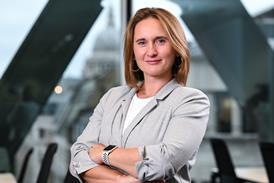
But Sami Saadaoui, head of AI and data science at Lumera, said members “need to understand what AI can and cannot do”.
“They need to understand how to provide useful context to an AI tool, and know why they should be cautious about sharing pension statements or other sensitive information with public AI services,” he said.
Mr Saadaoui added that the central risk was “misplaced confidence” in AI, because responses could be “inaccurate, incomplete, out of date, or inappropriate for an individual’s circumstances”.
“A partially correct answer can be particularly dangerous if it leaves out a relevant guarantee, scheme rule, tax implication or personal consideration,” he said.
Rising urgency
With more than half of UK adults using AI to manage their money in the past 12 months, according to research by Heywood, the crevasse opening up between members and schemes is increasingly stark.
While schemes and trustees could use newsletters or email campaigns to warn members about the potential perils of AI, the long-term solution involves embracing the technology themselves, and creating AI-driven tools and services specifically for members.
Doing so would engage members in the right way and provide them with quick responses.
Inevitably, pension schemes will face challenges because of the laws and regulations that need to be followed when communicating with members and because of the fiduciary duty involved.
But the urgency here is rising, especially in light of recent research by Aon that showed an AI tool giving four different answers to the question ‘which retirement option is best?’, even with the exact same data.
Significant milestones such as The Pension Scheme Act and the forthcoming pensions dashboard are likely to encourage further AI adoption by schemes.
A Society of Pension Professionals (SPP) poll found around a fifth of respondents believed AI could be a “core part of the solution” for improving member engagement.
As Priti Ruparelia, an SPP member and head of defined contribution at Independent Governance Group, said: “While AI may not be the whole answer, and its rollout must be balanced with any risks, it is increasingly seen as part of the toolkit for improving member engagement and retirement outcomes.”