
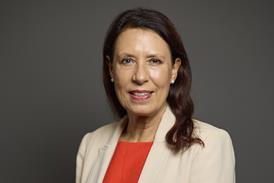



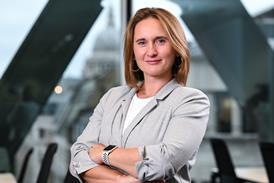






Louise Davey of Independent Governance Group explores the nuances and pressures of defined benefit scheme surpluses, and why strong and clear governance processes are essential.

Recent debate on defined benefit (DB) surpluses risks oversimplifying what is, in practice, a complex and fragile position.
While many schemes now report strong funding levels, the reality for trustees is more nuanced: surplus is contingent, sensitive to assumptions and market movements, and often not readily realisable.
The backdrop to this debate is a broader policy shift. As funding positions improve, policymakers are increasingly exploring whether surplus can play a more active role in driving growth, while also delivering for members. Sponsors have also understandably started to raise their own questions about accessing this capital, which has long been locked away or simply non-existent.
Greater flexibility hardly removes the need for caution. Quite the opposite. Where once the straightforward choice was to pursue a buyout or an alternative risk transfer transaction to secure long-term member benefits, a surplus opens up a whole new world of possibilities.
The focus for trustees is no longer solely on closing deficits and securing benefits, but on governing potential surplus under uncertainty. That requires a different mindset. Surplus is not ‘spare’ capital, but a by-product of a funding and investment strategy that must continue to deliver resilience over time.
Understanding the challenge

This should be factored in from the very start. Where did the surplus come from? How has the surplus already been deployed? What is the state of the scheme? How many members are left to collect benefits?
A crucial thing to remember is that surplus can and does disappear. Even well-funded schemes face a meaningful risk of reverting to deficit over time, particularly if capital is extracted prematurely.
A comprehensive, forward-looking analysis that integrates funding, investment and covenant considerations is required, rather than a simplistic snapshot valuation. And easier access to these new possibilities will require strict oversight to ensure that members’ benefits remain secure in any future scenario.
The core challenge is fiduciary. Trustees must balance competing and, at times, conflicting interests. Sponsors’ legitimate desire to access capital, member expectations of benefit improvement, and the need to maintain sufficient buffers to secure member benefits against future downside risk.
There is no fixed hierarchy to guide these decisions. Judgement, supported by robust evidence, is central. No two situations will be the same.
This is where professional trusteeship has a distinct contribution to make. Strong governance, disciplined decision-making and independence in negotiations are all essential if surplus is to be used appropriately.
“A large surplus is a blessing, but trustees will be harshly judged on how well they capitalise on this once-in-a-generation opportunity. It’s on us to prove we’re up to the challenge.”

As expectations rise, the quality of trustee decision-making will increasingly determine whether and how surplus can be accessed.
The key question isn’t whether schemes have surplus. It’s how trustees can steward it in a way that preserves member security while reflecting the shared interests of members and sponsors.
A busy year ahead
As the Burnham government settles in, Torsten Bell has made it clear the pension reform programme is still underway – with no sign of slowing down. The Pensions Schemes Act is only the start as the government looks to utilise a blossoming pensions sector no longer burdened by large deficits.
Decisions on surplus will be heavily scrutinised from all angles. Members, politicians and sponsors will all have a close eye on exactly how a surplus is being used – and those in the pension sector will need to be ready with answers.
To justify decisions, we need to be able to evidence our long-term planning, and work together as a sector to establish best practice in uncharted territory. We need to prove that increased surplus can, and should, work for members, corporates and the country at large.
Only with good governance and robust decision-making can surplus fulfil its potential. If trustees embrace their new paradigm, they must do so from a position of strength, supported by clear evidence and a relentless focus on optimising the value we can derive from this capital. That means assessing options beyond an insurance buyout.
A large surplus is a blessing, but trustees will be harshly judged on how well they capitalise on this once-in-a-generation opportunity. It’s on us to prove we’re up to the challenge.
Louise Davey is a trustee director and head of policy and external affairs at Independent Governance Group.