











Brightwell chief executive officer Morten Nilsson outlines the importance of resilience and understanding how risk management has changed as the wider investment universe has shifted.

For much of the past two decades, the task facing trustees and investment teams of defined benefit (DB) pension schemes was clear: repair deficits, manage risk and achieve funding stability.
That discipline remains vital. But the world pension schemes now operate in has changed fundamentally, and so too must the way we think about investment strategy.
The defining challenge today is not risk in the traditional sense. Risk can be modelled, hedged and priced. What schemes increasingly face instead is uncertainty: events that are difficult to predict, often interconnected, and capable of reshaping markets at speed.
Geopolitical conflict, inflation shocks, technological disruption, energy security, demographic change and climate risk now interact in ways that do not sit neatly within conventional asset class- or ESG frameworks.
Against this backdrop, resilience should be the organising principle for long-term pension investment strategy.
Understanding strategy resilience

Resilience is not about trying to forecast the next crisis. It is about ensuring that a portfolio, and the systems around it, can withstand and adapt to a wide range of investment environments and shocks while continuing to meet obligations to members.
Crucially, resilience goes beyond preserving value under stress. It also means retaining the capacity to evolve and capture opportunity as conditions change.
This perspective matters because uncertainty ebbs and flows and the pace of change is accelerating. Some risks dominate for a period, only to fade as others emerge.
These forces do not operate in isolation, and they rarely arrive one at a time. A resilient investment approach therefore requires continuous monitoring, prioritisation and adjustment, not a fixed checklist.
Sustainability, resilience, and fiduciary duty
For many schemes, sustainability has historically been the lens through which long-term risks were considered. Climate change, in particular, has rightly received significant attention. But an overly narrow interpretation of sustainability can be limiting.
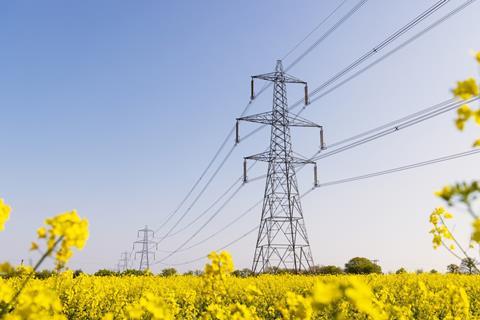
Energy security, food security, infrastructure resilience, geopolitical fragmentation, regulatory change and technological disruption may not always be labelled as ESG risks, yet they are central to pension scheme funding outcomes.
What unites them is that they are long-term risks with a wide range of potential outcomes. They are difficult for markets to price, often interconnected, and their importance changes through time.
They also affect the main risk factors relevant to most pension schemes: expected investment returns, real interest rates and longevity assumptions. As a result, the link to fiduciary duty is clear.
“The challenge now is not to choose between growth, security, or sustainability, but to integrate them within a coherent framework that recognises uncertainty as a permanent feature of the investment landscape.”

That is why resilience should be understood as a holistic concept, encompassing financial, market and sustainability-related factors together. It allows us to move beyond siloed thinking and focus instead on the robustness of the whole system. In practice, a resilience-led approach rests on a small number of enduring principles.
The resilience principles
First, portfolio construction matters. Diversification at the scheme level, across assets, sectors and risk drivers, is the first line of defence against shocks. Equally important is liquidity. Liquidity buys flexibility: the ability to meet obligations, respond to stress and reposition portfolios as facts change. This also demands discipline in the treatment of illiquid assets and a clear framework for collateral management.

Second, governance and mandate design are critical. Trustees need decision-makers with the right expertise, empowered to act within clearly defined risk boundaries. Mandates must balance control with flexibility, allowing skilled managers to respond to major events without being constrained by overly rigid guidelines. Experience of navigating market stress, the ability to react quickly and robust post-investment monitoring all matter when selecting managers.
Third, resilience is not static. Ongoing monitoring through exposure analysis, stress testing, and vulnerability assessment is essential. When new sources of uncertainty emerge, the question is not whether they fit an existing category, but how they affect the portfolio and where resilience can be strengthened.
Finally, engagement and learning matter. No scheme operates in isolation. Drawing on expert networks, sharing best practice across managers, collaborative industry groups and learning from real-world events all help improve preparedness over time.
Recent history underlines why this approach is necessary. The gilt crisis of 2022 demonstrated how quickly market stress can escalate and how vital governance, liquidity and diversification are in preserving funding positions.
More recently, sharp sector-specific sell-offs linked to technological change have highlighted the importance of understanding underlying exposures rather than relying on headline narratives.
None of this implies abandoning sustainability objectives or long-term stewardship. On the contrary, a resilience-led framework strengthens them by placing sustainability within a broader context of long-term value, risk management, and fiduciary duty.
For trustees, the challenge now is not to choose between growth, security, or sustainability, but to integrate them within a coherent framework that recognises uncertainty as a permanent feature of the investment landscape.
Resilience is not a destination. It is an ongoing discipline, one that demands humility about what cannot be predicted, rigour in portfolio construction, and clarity about what ultimately matters most: the long-term security of members’ benefits.
Morten Nilsson is chief executive officer at Brightwell.