
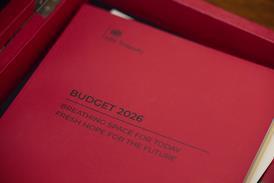











Pension industry experts have welcomed “common sense” measures in the Budget to simplify the treatment of death benefits and allow terminally ill people early access to their retirement pots.

The Budget report, presented to parliament this week by chancellor John Healey, stated that the government would make changes to the definition of terminal illness, designed to make it easier for terminally ill individuals to access their pensions savings.
Legislation will be brought forward in the Finance Bill 2026-27 “to allow a serious ill-health lump sum to be paid where the pension scheme member can be reasonably expected to live for less than a year”.
The measure will apply to any unpaid pension rights regardless of whether the member has reached age 75. The changes would also allow medical evidence to be provided by “overseas registered medical practitioners”.
Jenny Holt, product director at Standard Life, said: “Moving away from a rigid requirement that someone is expected to live for less than a year may sound like a subtle distinction, but in practice it should give medical professionals greater flexibility and help remove an unnecessary barrier for people at an incredibly difficult time.

“Our own research and user testing have shown that people dealing with serious illness want clearer information, straightforward guidance, and confidence that they are accessing the right option for their circumstances.
“We have also seen how differences in the medical evidence required by different systems can create additional paperwork and potential delays. Greater alignment between pension and benefit rules is therefore an important step towards making the process simpler and more consistent.”
James Carter, head of platform policy at Fidelity International, welcomed the announcement and added: “These measures will help to address the tensions, distress and poor outcomes people can face in moments of bereavement and terminal illness.”
Jon Greer, head of retirement policy at Quilter, described the new definition as “a positive step towards a more workable system, while retaining safeguards around early pension access”.
However, Greer added that the wording of the definition had not been finalised and there was no mention of when the new access rules would take effect.
“People facing a terminal diagnosis need clarity and timely support. The rules should reduce uncertainty, not add to it,” he said.
Greer continued: “Providers will need clear guidance on acceptable medical evidence, including evidence from overseas practitioners, so the change works consistently in practice.”
Beth Brown, partner at Arc Pensions Law, said the move “may come with a price tag for schemes” if more members are able to access benefits early. She said there was “likely to be a knock-on funding implication” for defined benefit scheme trustee boards to consider.
‘Common sense’ move to scrap two-year rule
Separately, the Budget also scrapped the “two-year rule” affecting the tax treatment of lump sum death benefits. This rule meant death benefits paid out more than two years after the death of a pension fund member were subject to tax.
The rule has been scrapped with immediate effect and will be legislated for in the Finance Bill 2026-27.
Renny Biggins, head of policy for long-term products and savings at The Investing and Saving Alliance, said the move was “a welcome piece of common sense”.
“Bereaved families should not pay a tax price for delays beyond their control,” he added.
Phil Wadsworth, Aptia’s chief actuary, said the “compassionate” change “should help address the unfair outcomes that take place under the current two-year rule, where bereaved families may face unexpected tax charges due to administrative delays”.

Arc’s Beth Brown warned that scrapping the tax penalty was “only half the story”, as some schemes may have to examine their rulebooks to ensure they can support the change.
“The Budget may have removed the legislative tax cliff edge without potentially removing a scheme’s own cliff edge,” Brown explained. “Trustees will need to check whether their rules impose an independent two-year deadline or simply track the tax legislation. Depending on the drafting, some schemes may need a rule amendment before trustees can make full use of the new flexibility despite the change having immediate effect.”