









The pensions minister has launched a robust defence of the government’s decision to amend the state pension triple lock.
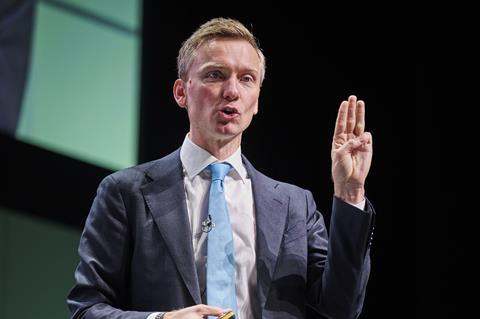
Addressing the Pensions UK Annual Conference in Liverpool this week, Torsten Bell sought to explain the thinking behind the government’s recent announcement about changes to the triple lock.
At the Labour Party conference last month, prime minister Andy Burnham announced that, while the triple lock would remain in place for the rest of this parliament, the earnings link would be adjusted to maintain the state pension as a percentage of median earnings, rather than be tied to annual wage inflation. This change would take place from the start of the next parliament, which Bell said would likely be after April 2029.
In his first industry address since the announcement, Bell framed the changes as part of a wider push to rebuild trust in the pension system. He said it was important to ensure the state pension was sustainable in a way that did not rely purely on raising the state pension age to manage affordability.
Sustaining trust in the system
“If we want people to trust the system, we need to give them good grounds for trusting it,” the minister said. “For two thirds to three quarters of the population, the state pension is a huge chunk of their retirement incomes. It really matters to the vast majority of the population.”
The triple lock has helped push the state pension to a record high as a percentage of median earnings, and this record level will be maintained until 2029 through the current triple lock arrangement, Bell explained.
“That means we’re providing a stable basis on which private pension savings can plausibly give people decent retirements, and that’s something to be celebrated,” the minister added.
However, he emphasised that “we need to be able to look people in the eye and say that we can guarantee the state pension will keep rising every year and it will stay at that record high level relative to wages, but you won’t have to wait until your 70s to get it”.
Bell said the cost of the triple lock had been at least partially paid for by state pension age increases during the previous Conservative government. If this continued, the age would have to rise to 71, he said.
What the new triple lock will look like
Under measures brought in by the Conservative-Liberal Democrat coalition government, the state pension rises every April by the highest of 2.5%, inflation, or average earnings.
Plans announced by Andy Burnham at the Labour Party conference mean an amended triple lock will take effect from 2030. This will mean that the state pension will rise every April by the highest of inflation or 2.5%, or the amount needed to keep it at its current level as a percentage of median earnings.
‘The right thing to do’
Through the new triple lock arrangement, the pensions minister said the government would be “anchoring the state pension to that level relative to wages that workers are earning, which is the right way to think about it”.
He acknowledged that the proposal was complicated, but maintained that it was “the right thing to do”.
“There will be politics around [the triple lock change], but everybody basically knows that it is the right thing to do. You are lying if you say we have a sustainable state pension without this reform.”

Bell told delegates: “We need to be able to promise people that the state pension will rise every year. We’ve got to protect pensioners against big increases in prices. And long term we need to make sure that pensioners share in the growth of the economy.
“There will be politics around it, but everybody basically knows that it is the right thing to do. You are lying if you say we have a sustainable state pension without this reform.”
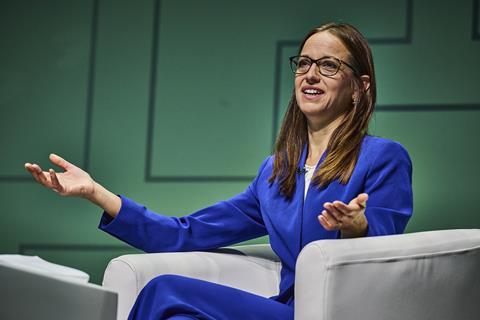
Bell’s comments came a day after shadow pensions minister Helen Whately warned that prime minister Burnham would “live to regret” his planned changes to the triple lock.
Whately, Conservative MP for Faversham and Mid Kent, reiterated her party’s opposition to the government’s plan.
“We have been consistent before and after the Labour Party conference – the triple lock is our party policy,” Whately said. “We introduced it as we were very concerned about pensioner poverty, and it’s been doing an important job improving the incomes of people in retirement.”
In his speech, however, Bell downplayed the effect of the triple lock on reducing pensioner poverty, pointing to data that showed Pension Credit had had a bigger impact on reducing poverty than the triple lock.
Whately questions numbers behind changes
Whately also questioned the idea of savings from the triple lock change being used to help fund social care, arguing that the numbers did not match up.
“On the one hand, [the prime minister] has created uncertainty for people about the level of the state pension, while on the other hand he’s created a bigger financial black hole by offering free social care,” Whately said.
“I think there is a big problem with what Andy Burnham and potentially Torsten Bell thought was a clever way of achieving the prime minister’s ambition of saying something on social care, and doing it through the triple lock, but I think they will live to regret it.”
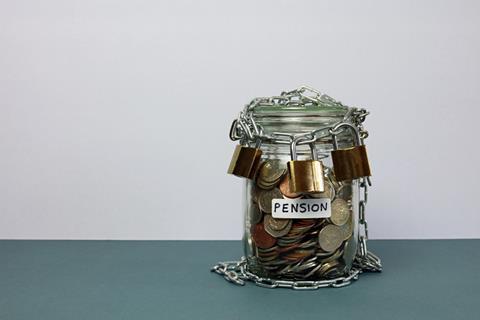
The government’s proposal has been cautiously welcomed by the pensions industry amid acknowledgements that the triple lock in its current form was unaffordable in the long term.
Calum Cooper, head of pension policy innovation at Hymans Robertson, said following Burnham’s announcement: “The prime minister has opened the right debate. The triple lock cannot sensibly continue forever, but reform should not be a simple cost-cutting exercise. We need a clear adequacy target, protection against inflation, and a credible long-term link to earnings.”