










Triple lock to end after next election to fund a National Care Service
Prime minister Andy Burnham has announced plans to scrap the state pension triple lock after the next general election.
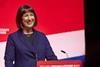
Speaking at the Labour Party conference, he announced that pensions will instead rise each year at least by inflation or 2.5%, to create funding for a later life National Care Service.
The triple lock has long been seen as politically untouchable, for fear of losing the powerful grey vote. However, many within the pensions industry have long argued that the triple lock is unsustainable.
Kate Smith, head of pensions at Aegon, said: “Aegon has long called for a serious conversation about how the state pension can remain affordable, sustainable, and fair across generations, so we’re pleased to see the prime minister leading the way and giving certainty for future state pension increases.”
Mark Pemberthy, benefits consulting lead at Gallagher, added: “Burnham’s proposal is a significant change, but it’s important to remember the state pension will still rise each year - whether by inflation or 2.5% - with a commitment to maintain its value relative to earnings over time. For many pensioners, this will be an acceptable trade-off for greater protection from the costs of care later in life.”
That said, scrapping the triple lock could further worsen pensioner poverty and fuel an inadequacy crisis, especially for future generations. As Calum Cooper, head of pensions policy innovation at Hymans Robertson said: “Currently, the state pension provides around 90% of the Pensions UK minimum retirement standards needed for the bare minimum of what is deemed a good retirement, with financial independence and dignity at its core. And this is expected to rise to near 100% within a decade.
“The perception of wealthy pensioners misses the vast swathes of pensioner poverty existing in the UK, and the government’s commitment to protect low-income pensioners was highlighted by the Prime minister today. Pensions are built on the foundations of a social contract where each generation should expect to be no worse off than previous generations.”
The devil’s in the detail
With such a significant reform of the pensions system, the devil will be in the detail. “Ending the triple lock is a significant change and will understandably concern many pensioners and those approaching retirement. Our research shows almost eight in ten over-55s are worried that changes to the State Pension or triple lock could leave them financially worse off, while 61% say frequent speculation makes it harder to plan confidently,” said Lily Megson-Harvey, policy director at My Pension Expert.
Megson-Harvey added: “The priority now is turning today’s announcement into something people can plan around. Government must be clear about how the new system will work, how the State Pension will maintain its value relative to earnings and what the transition will mean in practice.”
Kate Smith explained: “Increases in earnings will still have a role to play, so pensioners are able to share in the relative prosperity and won’t lose out if UK earnings significantly outperform price increases. However, it’s unclear how this will work in practice. It could possibly involve an element of smoothing of earnings increases over a few years relative to the increases in prices and the 2.5% increase. We await the detail.”
Calum Cooper added: “The Prime Minister has opened the right debate. The triple lock cannot sensibly continue for ever, but reform should not be a simple cost-cutting exercise. We need a clear adequacy target, protection against inflation and a credible long-term link to earnings.”