









The chancellor’s decision to exclude the lowest-earning pensioners from paying income tax will only delay the issue and still requires a long-term fix, according to industry experts.
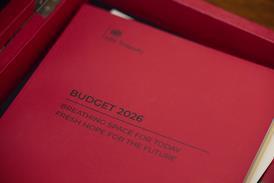
In his first Budget speech, chancellor John Healey introduced a “Pension Tax Allowance”, which will keep pensioners earning less than the new state pension out of paying tax.
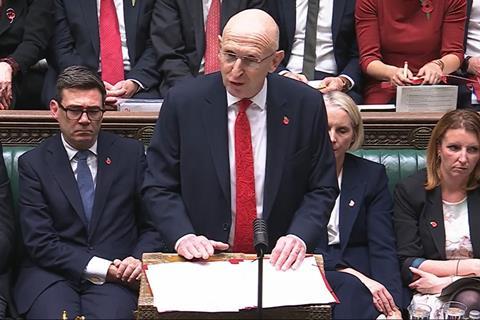
However, the measure will last only from April 2027 to the end of the current parliament, meaning the longer-term issue of pension taxation remains unresolved.
The annual allowance will remain frozen at £12,570 until at least April 2031, while the triple lock will see the new state pension rise to £13,036.40 a year from next April.
Healey announced that people above State Pension age with total income up to and including the value of the new State Pension will not pay income tax – with an estimated 500,000 pensioners set to benefit either by paying no tax or receiving a “tapered allowance”.
Several commentators immediately highlighted the temporary nature of the measure, as well as warning of a potential unfairness for those just above the threshold – as well as those still working.
“We welcome action to ensure that the million pensioners with an income at or below the level of the state pension are not brought into paying income tax. The state pension provides the foundation of retirement income. Protecting the incomes of those most reliant on it is consistent with the wider objective of improving retirement adequacy.”

Looming ‘headache’ for future policymakers
Andrew Tully, technical services director at Nucleus, said: “While this change will be helpful for some pensioners, it creates an unfair situation where a working person with the same income as a pensioner will pay a different amount of tax.
“Tax policy should be based on how much income someone has, not where it comes from. Creating a carve-out for one group of taxpayers adds further complexity to any already horribly difficult tax system and weakens the principle of equal treatment.”

Former pensions minister Steve Webb warned that the chancellor risked creating a “long-term headache” with the temporary move. He highlighted that no money had been set aside to facilitate the allowance after 2030, meaning future administrations will need to fund it or justify a tax increase on low-income pensioners. With annual allowances frozen until 2031, the cost of the policy will only increase.
“Taking those wholly dependent on the new state pension out of tax is a quick fix to the embarrassment caused by the repeated freeze in the tax-free allowance,” Webb said. “But the longer the policy goes on, the harder it will be to switch off. There is a real risk that this ‘quick fix’ will turn into a long-term headache for this government and its successors.”
Allowance not a fix for fiscal drag
Jamie Jenkins, director of policy at Royal London, said the new allowance “doesn’t make the wider issue of frozen tax thresholds disappear”.
“We welcome measures that help people make the most of their money in retirement. For people relying on the State Pension, every penny counts, so ensuring its increase isn’t eroded by income tax will make a real difference.”

“Many pensioners receive income from workplace or private pensions alongside their state pension, and as pension incomes rise while tax thresholds remain frozen, more people could find themselves paying tax or paying tax on a greater proportion of their income.
“It’s increasingly important for people approaching or in retirement to understand how their different sources of income interact with the tax system.”

Jon Greer, head of retirement policy at Quilter, added that the Pension Tax Allowance was “another sticking plaster over the cracks created by years of fiscal drag”.
“The automatic tax deduction is welcome and should spare pensioners on modest incomes the burden of claiming relief simply to avoid a small tax bill,” Greer said, but emphasised that communication would be “essential” to help people understand how their tax position may change.
“This is relief from the consequences of frozen thresholds, not a solution to fiscal drag,” Greer said. “Automatic support is welcome, but pensioners need to understand how the taper works and what happens when the allowance ends in April 2030. A temporary fix should not become another source of long-term uncertainty.”