


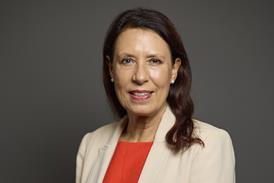









As the pensions industry absorbs the Pensions Commission’s interim report and assesses its findings, Pensions UK’s Matthew Blakstad highlights some key points and where the trade body will focus its efforts in the coming months.

The second Pensions Commission was established to provide the government with a blueprint for a future retirement system that is fair, adequate and sustainable.
In the present economic climate, that is no small task. Yet the Pensions Commission’s interim report, published this week, is a significant first step towards this goal. It provides a rigorous and clear-sighted diagnosis of the areas of pensions policy that need to change to achieve the stated goal of ‘finishing the job’. It is also bold in suggesting a range of significant changes across the pensions system.
Pensions UK, along with our membership, has been working closely with the Commission as they developed these initial findings. We are delighted to see so much in this report that reflects the evidence and insight we’ve already been able to provide.
We now look forward to working together as a sector to help shape the detailed recommendations that will fulfil the promise of this first report. Our full response will follow in a series of evidence reports and policy proposals over the coming months – but there is already much here to welcome.

A more nuanced definition of ‘adequacy’
Under the proposals outlined in the interim report, an adequate income for a middle earner would still be calculated as a proportion of their pre-retirement income – in the jargon, a ‘target replacement rate’, but for lower earners, it would be an absolute level of minimum income.
This ‘hybrid’ approach would ensure that those at the bottom of the income distribution can still expect a decent basic standard of living, while those earning more avoid significant drops in income.
“The Commission is right to look for changes to the minimum rates at which so many workers are currently saving, as well as to the eligibility criteria and income thresholds that currently exclude many lower earners from saving.”
Matthew Blakstad, Pensions UK
Pensions UK’s Retirement Living Standards (RLS) already provide a robust and widely accepted measure of ‘minimum’, ‘moderate’, and ‘comfortable’ living standards. With updated RLS figures due in early June, we look forward to working with the Commission to establish its role in setting a new standard for adequacy.
Setting fair contributions for all

The report is also clear that contributions need to rise for those saving in workplace pensions. The Commission is right to look for changes to the minimum rates at which so many workers are currently saving, as well as to the eligibility criteria and income thresholds that currently exclude many lower earners from saving.
The commissioners also highlight the risks to lower earners of being nudged into higher contributions that they may not be able to afford. That’s why we will shortly publish a major new report, supported by a group of our members, exploring a range of different flexibilities that could be built into the auto-enrolment system, to get people saving while protecting them from financial harm.
The report encompasses a year’s worth of analysis and on-the-ground research with pension savers and their employers. It will provide a framework to help the commissioners set a fair, adequate and sustainable contributory system for the future.
Making the state pension a foundation for saving
We are heartened to see the Pensions Commission inviting views on the future level and indexation of the state pension. It won’t be possible to deliberately set employer and employee contributions at an adequate level without knowing how private savings and the state pension will work together to deliver adequacy.
This means moving away from a binary debate about whether to maintain or remove the triple lock, and starting a focused and pragmatic conversation about how the state pension can work in future. This will need to consider what level it needs to reach to provide a stable foundation for everyone’s retirement incomes.
Addressing savings gaps
The savings gaps set out in the report are stark. We recently supported a report, ‘Stacked Disadvantages’, that dug deep into the causes of the unequal savings levels that exist across society – not least between different genders and ethnicities.
Many potential policy solutions lie outside the sphere of pensions, but this should not stop us from setting future pensions policy in ways that help address these savings inequalities.

We also support new interventions that make it easier for self-employed people to save for retirement. Whatever approach the Commission or government chooses to take, the pensions sector has a key role to play here, ensuring that self-employed people can access high-quality, good-value products.
Pensions UK will act as a bridge between the industry and government, ensuring that future policy for self-employed pensions can be delivered effectively and at scale.
Delivering incomes, not savings
Finally, we are pleased to see the Pensions Commission highlighting the clear risks that arise from the ‘pension freedoms’ in relation to how pension pots are accessed and managed.
Pensions UK has long called for a framework that requires schemes to deliver sustainable incomes at retirement. The Commission highlights the important role of defaults in protecting individuals from facing complex choices and associated risks.
This is just a few highlights from a broad range of policy measures prioritised in the report. I could just as easily have highlighted measures to support savers with longer working lives or strong investment returns.
The strength of the Pension Commission’s approach is that it demonstrates how all these factors need to work together to ensure a stronger pensions settlement that works for all savers for decades to come.
Matthew Blakstad is deputy director of strategic policy at Pensions UK.