








Trustees need to start incorporating the impact of geopolitical and economic uncertainty into sponsor covenant assessments, according to LCP.
The new defined benefit (DB) funding regime requires pension scheme trustee boards to assess how long they expect an employer’s covenant to remain strong enough to generate cash for contributions.
This work should include looking at cash flow forecasts and business plans – but should also factor in the impact of global events such as the ongoing conflict between the US and Iran, LCP said.
“Recent global events have shown how quickly circumstances can deteriorate, with significant and persistent impacts on employer strength.”
Helen Abbott, LCP
The consultancy pointed to the Pensions Regulator’s 2025 annual funding statement, which emphasised the need for trustees to consider factors such as international trade issues and geopolitical uncertainty when assessing covenant. Other long-term factors, such as the energy transition, should also be assessed if they are likely to affect the strength of a sponsor.
Profit warnings driven by geopolitical uncertainty

The US and Iran have agreed on a two-week ceasefire that will ensure the reopening of the Strait of Hormuz, a key shipping route for the oil industry. Oil prices have soared in recent weeks due to the conflict, with other asset prices and company valuations hit hard amid the turmoil.
Helen Abbott, partner in LCP’s covenant team, said: “Understanding covenant reliability is central to managing a DB scheme. Recent global events have shown how quickly circumstances can deteriorate, with significant and persistent impacts on employer strength.”
Separate research published by EY last month found that, of 63 warnings issued by defined benefit (DB) pension scheme sponsors last year, 42% cited policy change or geopolitical disruption. EY said this was the highest level seen in its 25 years of tracking the data.
Although the total number of warnings from DB sponsors fell to 63 in 2025, down 21% from 80 in 2024 and the lowest annual total since 2021, more than a quarter (27%) of UK-listed companies with a DB scheme have issued at least one profit warning in the past 12 months.
LCP’s Abbott added: “Trustees who monitor covenant continuously and maintain open, proactive communication with their sponsor will be far better placed to navigate difficult periods and take decisive action when needed.”
Vigilance needed as geopolitical tensions drive DB sponsor profit warnings

EY’s analysis of UK-listed DB sponsors highlighted the need for open and transparent communication between sponsors and trustees, which should help trustees to find the right balance between protecting members and supporting sponsor objectives. Read the full article.
LCP said those companies most likely to be affected by the US-Iran conflict include those with “energy-intensive operations or supply chains that run through impacted geographies”. Even companies less directly affected could still experience negative consequences such as cost inflation, declining demand, or difficulties with financing.
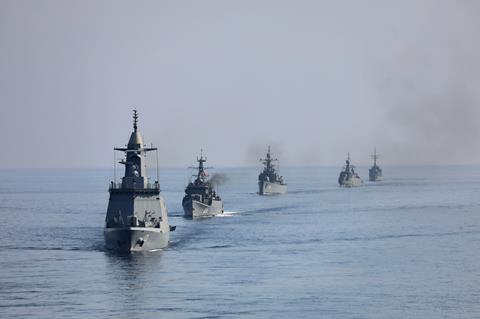
The recent Middle East military activity is just the latest in a series of events that have challenged many businesses, including Russia’s invasion of Ukraine, the US administration’s attempts to levy trade tariffs on imports, and recent tax changes in the UK. LCP also highlighted that some companies were still recovering from the impact of the Covid-19 pandemic.
If a scheme’s covenant is weakening, trustees should consider actions such as accelerating contribution schedules or implementing contingent asset arrangements. They can also derisk investment portfolios and explore endgame options.
“Covenant reliability still matters for well-funded schemes,” LCP stated. “A lot of schemes don’t have a funding deficit now, but trustees still need to take a proportionate look at the strength of the covenant, including its reliability.”