









The Pensions Commission must be “brave” in its final report and recommendations next year, the Pensions Management Institute (PMI) has urged, after its interim report highlighted significant under-saving issues across the UK.
The interim report warned that millions of people were not saving enough for retirement, and millions more were not saving at all – despite the success of auto-enrolment in improving pension coverage.
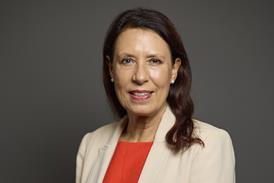
Helen Forrest Hall, chief strategy officer at the PMI, described today’s (19 May) report as “a wake‑up call”.
“Automatic enrolment for workers transformed participation, but the job is unfinished and the risks are growing,” she said.
“The pensions industry needs bold and innovative solutions on the scale of automatic enrolment to deliver adequate retirement incomes.”
Helen Forrest Hall, Pensions Management Institute
“With 15 million people undersaving, incremental change will not be enough. The Pension Schemes Act is a strong start, but the industry needs bold and innovative solutions on the scale of automatic enrolment to deliver adequate retirement incomes.
“We call on the Pensions Commission to be brave in its recommendations and build cross-party consensus for an enduring reform roadmap.”
Andrew Tully, technical director at investment platform Nucleus and a long-time campaigner for a Pensions Commission, welcomed the report but highlighted the importance of a stable long-term policy framework.
“We’re seeing a deep erosion of trust in the retirement system,” Tully said. “Constant tinkering with pension rules makes long-term planning feel pointless.
“The commission is a step in the right direction, but confidence won’t return until people believe the rules will remain stable in the long term. We need clear communication and a joined-up approach across pensions, housing, and savings to give people the certainty they need to plan properly for the future.”
What does adequacy really mean?

A key element of the Pensions Commission’s work will be to work with businesses, trade unions and the pensions industry to “develop a consensus view on further reform”, according to Patrick Heath-Lay, chief executive officer at People’s Pension.
He explained: “That needs to start from an idea of what the pensions system is here to do and what levels of income the state pension and legal minimum pension contributions should target.
“The report recognises that it’s hard to make judgements about how much automatic enrolment recommends people save without a clear understanding of what an adequate retirement income is.”
While the success of auto-enrolment and continuing political consensus behind it was noteworthy, Heath-Lay warned that “the economics of reforming the system are more difficult now than in the early 2000s” when the first Pensions Commission carried out its work.
“Despite this, we’re optimistic that the right combination of leadership, collaboration and understanding will deliver a positive roadmap for the UK pensions system,” the CEO added.
Gaps, shortfalls, and strains on the system
The interim report’s data and analysis build on many of the gaps and issues first highlighted in government publications around the commission’s launch last summer.
These include gender and race-related income gaps that lead directly to pension shortfalls, and a lack of retirement saving options for the self-employed.

James Carter, head of platform policy at Fidelity International, said: “The Pensions Commission rightly highlights the differing experiences across the population, with some groups facing particularly stark challenges. Closing these gaps will be a significant part of its work.”
Carter cited Fidelity’s analysis of self-employed workers, which found that these people “may need to work for several years longer than employees to achieve a comparable retirement income”.
Dr Andrea Barry, deputy director for work at the Centre for Ageing Better, highlighted the interim report’s data on older workers. She argued that supporting this section of the population was “central to pensions adequacy and needs to be a higher priority for this government”.
“The government needs to ensure that fewer people leave the labour market with years to go before state pension age and without the necessary financial resources for an adequate retirement.”
Dr Andrea Barry, Centre for Ageing Better
“Early, abrupt, and often unplanned ends to people’s working lives in their 50s and early 60s is a major risk to pension adequacy,” Barry continued. “Often this is driven by health, caring responsibilities, and individual circumstances.
“The government needs to ensure that fewer people leave the labour market with years to go before state pension age and without the necessary financial resources for an adequate retirement.”
Supporting older people to stay in work will help this while also supporting the government’s aim to improve economic growth, she added.
Unions urge ‘bold’ action and ‘fair deal’
Steve Thomas, deputy general secretary of the Prospect trade union, urged the government to take action to address the gender pensions gap.
“With estimates of the gap varying from more than 30% to almost 50% the government must use the findings of this report as a spur to take action,” he said.
“People should not work their whole lives only to retire in poverty. All parties must surely recognise this and agree a long-term plan to ensure everyone can retire on a liveable income.”
Steve Thomas, Prospect
Thomas added: “People should not work their whole lives only to retire in poverty. All parties must surely recognise this and agree a long-term plan to ensure everyone can retire on a liveable income.”
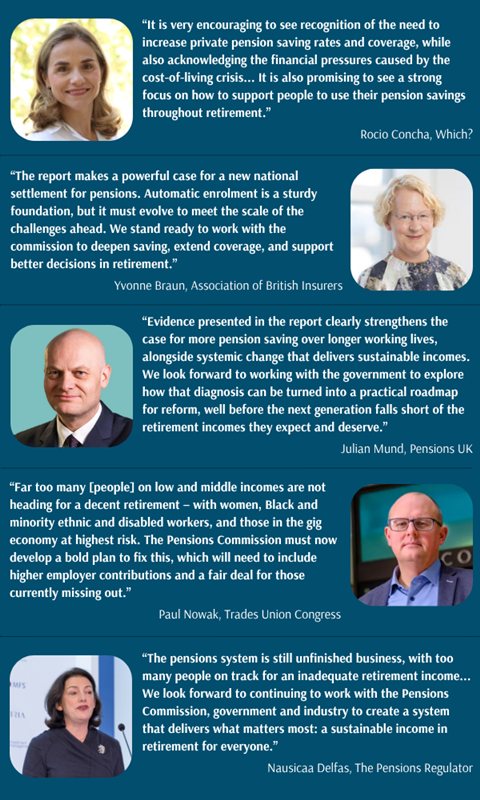
Paul Nowak, general secretary of the Trades Union Congress, added: “Workers deserve a pension system that guarantees against poverty in retirement and enables them to maintain their standard of living.
“Although millions more people are now building up workplace pensions, far too many on low and middle incomes are not heading for a decent retirement – with women, Black and minority ethnic and disabled workers, and those in the gig economy at highest risk.”
Nowak urged the commission to set out a “bold plan” to address these issues, including higher employer contributions and a “fair deal” for those currently excluded from the pension system.