










The pensions minister has defended the government’s controversial decision to cap salary sacrifice, calling on the pensions industry to focus on other tax reliefs instead.

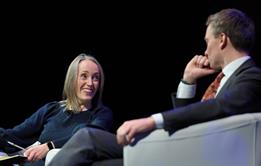
Speaking at the Pensions UK Investment Conference in Edinburgh this week, Torsten Bell rejected concerns about the cap removing an incentive to save.
“I read a lot of very dangerous copy saying things like, people won’t have an incentive to save,” the minister said. “That is untrue: £70bn of pension tax reliefs exist.
“There are huge incentives for almost everybody to save into a pension, and that is tax relief that is available to everybody in the system, not to a subset of people in the system. That is the vehicle by which we should incentivise saving.”
“The cost of pension salary sacrifice was going to triple to about £8bn by the end of the decade if we had done nothing.”
Torsten Bell, pensions minister
He also highlighted that the salary sacrifice regime excluded groups such as the self-employed.
Bell acknowledged that salary sacrifice was “embedded” in the system, which was why the government had taken a “pragmatic approach” through the introduction of a cap and a long lead-in time. While the legislation is being debated in parliament this month, it is not due to come into force until 2029.
“The wider changes on salary sacrifice are happening because you should want a government that keeps tax reliefs under review,” Bell said. “We spend about £500bn on them a year, it’s a lot of money.
“The cost of pension salary sacrifice was going to triple to about £8bn by the end of the decade if we had done nothing.”
Pensions UK has warned that the real-world impact of the salary sacrifice cap has been underplayed, with far more people set to lose out than the government has forecast.
Writing for Pensions Expert last month, Zoe Alexander, executive director of policy and advocacy at Pensions UK, said: “In an adequacy environment that is already precarious, even small reductions in contribution rates have disproportionately large retirement income consequences. Lower earners, who already struggle to contribute at meaningful levels, are likely to be hit hardest.”
The Office for Budget Responsibility has also cast doubt on the government’s projections, with data indicating that many of the 4.3m people who receive salary sacrifice contributions below the proposed £2,000 cap could still be negatively affected by the government’s move.
Last week in the House of Lords, an amendment to legislation relating to the cap raised it to £5,000. Speaking to journalists earlier today, Bell indicated that he was not concerned by this and emphasised the need to manage costs.
The third reading of the National Insurance Contributions (Employer Pensions Contributions) Bill in the Lords begins tomorrow.
Pensions UK Investment Conference
All the coverage from the three-day industry gathering in Edinburgh.
- 1
- 2
- 3
- 4
 Currently
reading
Currently
reading
Bell defends salary sacrifice cap and rejects incentive concerns
- 6
- 7
- 8
- 9
- 10
- 11
- 12