








Alltrust managing director James Floyd speaks out against the consequences of the government’s planned cap on salary sacrifice, following publication of the OBR’s analysis earlier this month.

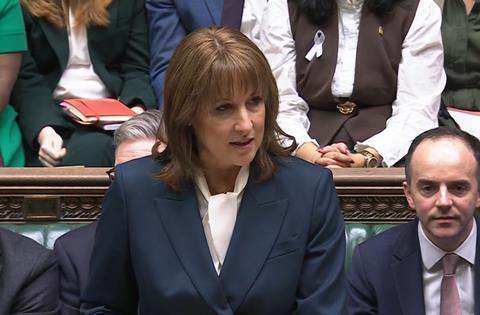
I’ve previously argued that chancellor Rachel Reeves’ salary sacrifice cap is a raid on private-sector retirement savings disguised as tidying up the tax system. It will hurt middle-income workers, not just high earners. And the behavioural consequences will make the Treasury’s revenue projections look like fiction.
Some people agreed. Some thought I was being dramatic. A few suggested I was overstating the impact because the cap only affected contributions above £2,000.
Earlier this month, the Office for Budget Responsibility (OBR) published its assessment. The picture is significantly worse than even I argued.
OBR data challenges government claims on salary sacrifice cap
New data from the Office for Budget Responsibility indicates that far more people will be affected by the planned salary sacrifice cap than initially expected. Read the full article.
The behavioural response
The government told us 3.3 million people would be affected. The other 4.3 million? Protected, apparently.
The OBR disagrees. It now says all 7.7 million salary sacrifice users could be affected. Not because they breach the cap individually, but because of how employers will react to it. The OBR describes the behavioural response as “highly uncertain, given the various channels through which employers and employees can respond”, which is about as close as the civil service gets to saying the Treasury’s assumptions are wishful thinking.
This is the bit the Treasury either didn’t model or chose to ignore.
When you impose a cap on salary sacrifice, employers don’t just adjust the bit above the threshold and leave everything else alone. They look at the whole scheme. The administrative cost, the payroll complexity, the compliance burden. And some of them decide it isn’t worth it anymore.
The OBR has confirmed that some employers will abandon salary sacrifice entirely and move everyone to relief at source.
This means that workers contributing £80 a month through salary sacrifice (nowhere near the cap) suddenly lose the National Insurance savings they were getting automatically. Their take-home pay drops. Not because they did anything wrong, but because their employer made a rational decision to simplify.
Who really pays?
For higher and additional rate taxpayers caught in this switch, it gets worse. Under relief at source, the pension provider claims back basic rate tax relief automatically, but anything above that has to be recovered through self-assessment. The OBR estimates around 10% of higher-rate taxpayers simply won’t reclaim, meaning they’ll lose tax relief they’re entitled to.
Then there are wages. The OBR estimates 76% of the cost hitting employers will be passed through to employees, mainly through lower pay. So, the workers the government claims to be protecting are going to earn less as a direct consequence of this policy.

Former pensions minister Steve Webb put it well: “Far from ordinary workers being protected, millions of people on modest incomes will lose out, further undermining their incentive to save.”
The Institute and Faculty of Actuaries’ modelling shows that delaying a pension by 10 years costs a saver £300,000. Going part-time costs £200,000. The Association of Consulting Actuaries has concluded that the UK retirement system is “built on outdated assumptions”.
Nearly one in five UK pensioners already live in poverty, and our net pension replacement rate sits below the OECD average. This is the backdrop against which the government has decided to make pension saving harder.
The behavioural response to policy changes is not a footnote. It’s the whole story. When you make pension saving less efficient, people save less. When you make salary sacrifice harder to administer, employers stop offering it. When you squeeze employers, they squeeze wages.
“This policy doesn’t just affect high earners gaming the system. It affects millions of ordinary workers trying to save for retirement.”
James Floyd, Alltrust
The Treasury knew this. It published a costing note acknowledging behavioural impacts, but the messaging was that 95% of workers earning under £30,000 would be protected. That line is now demonstrably misleading. The OBR has made clear that indirect effects could reach every salary sacrifice user in the country.
Short-term gain, long-term pain
It’s the same pattern with every pension policy change for the last decade – short-term revenue grab, long-term damage to retirement outcomes, and a political class that won’t be around to deal with the consequences.
The cap is expected to raise £4.7bn in year one. The cost of inadequate private pension provision will be measured in multiples of that – it just won’t show up until these politicians have moved on.
If you’re an employer, start planning now. The cap doesn’t take effect until April 2029, but the decisions you make about scheme design in the next two years will determine whether your employees are better or worse off. Employer contributions remain exempt from National Insurance, and there are structures that work. But they require thought, advice, and lead time.
If you’re a saver, understand that salary sacrifice is changing, not disappearing. But you need to know what your employer is planning. If they’re switching to relief at source, make sure you understand what that means for your take-home pay and your tax position.
And if you’re in government, the OBR just told you what the rest of us already knew. This policy doesn’t just affect high earners gaming the system. It affects millions of ordinary workers trying to save for retirement in a system you keep making harder to navigate.
The consequences will play out for decades. Just not on this parliament’s watch.
James Floyd is managing director of Alltrust Services.