


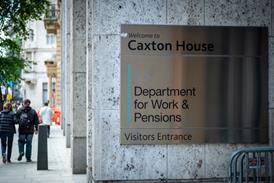






The Department for Work and Pensions (DWP) has set out how it expects defined contribution (DC) master trusts to hit the £25bn scale requirement set out in the Pension Schemes Bill.
Those not at £25bn already, and unlikely to make this landmark by 2030, will be permitted to join the “transition pathway” if they expect to reach the required level of assets by 2035.
New entrants will have a separate “pathway”, which will require providers to have a “materially different offering compared to existing market participants” as well as being able to “demonstrate strong potential growth sufficient to meet the scale requirement”.
The minimum size requirement applies to a provider’s “main scale default arrangement”. Some life insurers offer a master trust and group personal pension (GPP) arrangement with the same underlying investment strategy, which can qualify as the default arrangement for the DWP’s scale test purposes.
While only four master trusts have reached the required size, according to industry data, the department said it believed some providers with as little as £5bn could still hit the £25bn mark by 2035 through organic growth.
The DWP’s scale test will also include requirements related to governance and investment expertise.
Lords seek exemptions for innovators and top performers


The Pension Schemes Bill, which contains the high-level framework for the scale test, is still being debated in the House of Lords, with the report stage set to begin next week. Peers have tabled several amendments seeking to put more detail into the government’s legislation.
An amendment backed by several peers seeks to provide an exemption from the size requirement if a pension scheme “has achieved a high value for money rating in at least two consecutive assessments”.
The same amendment would also allow an exemption of “there is no reasonable evidence that consolidation of the scheme into another arrangement would be likely to improve outcomes for members”.
Baroness Sheila Noakes, Baroness Deborah Stedman-Scott and Baroness Lucy Neville-Rolfe have tabled amendments that would allow sub-scale master trusts and GPPs to be exempt from the £25bn requirement if they demonstrate above-average investment performance.
Meanwhile, Baroness Stedman-Scott and Viscount James Younger have put forward a separate amendment that would allow default arrangements that pass an innovation test to be exempt from the size requirement.
Other amendments aim to add flexibility to the definition of “main scale default arrangement”, so that master trusts with multiple default funds can still pass the DWP’s size requirement.
Consultation incoming
The DWP emphasised in its plan that it would work with the industry and regulators to develop the scale test, including through a formal consultation.
Under the government’s current plan, published last year as part of its “roadmap” for pension reform, master trusts with more than £10bn in assets will be expected to hit £25bn by 2030.

Kelly Parsons, head of DC proposition at Broadstone, said consolidation was likely to accelerate across the market as many DC providers would not be able to reach £25bn just through organic growth.
“At the same time, scale in itself will not be sufficient,” Parsons continued. “Providers will need to demonstrate that they have the investment expertise, operational resilience and governance structures required to manage larger pools of capital effectively. The focus should ultimately remain on delivering value for members, rather than size being viewed as the sole measure of success.
“For employers and trustees, the reforms underline the importance of reviewing long-term DC strategy now. Understanding whether a scheme can realistically achieve the required scale, or whether consolidation may deliver better outcomes, will be a key decision as the market continues to evolve.”