The government’s move to cap annual pension contributions eligible for salary sacrifice at £2,000 represents “short-sighted tax policy”, according to the Institute of Chartered Accountants of Scotland (ICAS).
Recent research by the Standard Life Centre for the Future of Retirement found that more than 10% of the 500 employers it polled earlier this year had already moved to end their salary sacrifice pension arrangements due to the cap, which comes into effect from April 2029.
In addition, the research found that two in five employers currently offering salary sacrifice said they were less likely to do so in the future because of the cap. Leaders of smaller businesses with 10 to 49 employees were most likely to say that the cap would affect them, Standard Life reported, with half (49%) saying they would be less likely to offer salary sacrifice in the future.
“At a time when private pension saving is already insufficient and the population is ageing, measures that disincentivise pension saving represent short‑sighted tax policy.”
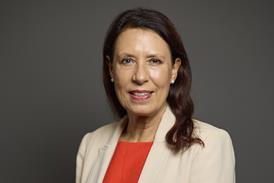
Katie Close, Institute of Chartered Accountants of Scotland
Katie Close, director of tax at ICAS, said it was “unsurprising” that some employers were already pulling the plug on salary sacrifice.
“The changes to salary sacrifice announced in the 2025 Budget will have long‑lasting impacts for both individuals and businesses,” Close said. “At a time when private pension saving is already insufficient and the population is ageing, measures that disincentivise pension saving represent short‑sighted tax policy – particularly in the absence of wider reform to encourage long‑term retirement saving.”
Exacerbating pension adequacy issues

Close highlighted separate research into pension adequacy from the Institute for Fiscal Studies, which found that around 30% to 40% of people saving for a pension were unlikely to achieve an adequate retirement income.
The salary sacrifice cap risks “exacerbating this problem if employers respond by withdrawing salary sacrifice schemes or reducing the generosity of pension provision for all workers”, Close said.
She continued: “Pensions policy needs to be coherent, stable and long‑term so that employers, pension savers and the pensions industry can plan with confidence. The ultimate objective must be to ensure people have an adequate income in retirement.
“Without that clarity and certainty, reforms risk undermining the very outcomes they are meant to support, while potentially widening existing inequalities such as the gender pensions gap.”
In the immediate aftermath of November’s Budget announcement, the Institute for Chartered Accountants in England and Wales (ICAEW) also voiced concerns about the cap. Adelle Greenwood, technical manager for employment taxes and national insurance contributions at the ICAEW, said: “At a time when there is a pensions commission considering the adequacy of pension saving, this demonstrates a lack of joined-up thinking from the government.”
Government standing firm in face of opposition
Peers in the House of Lords have also voiced strong concerns about the salary sacrifice cap, with Baroness Lucy Neville-Rolfe arguing: “There is no sign that the government have seriously engaged with the concerns we expressed. Significant features remain undefined.”
For several months before and after the Budget, several trade bodies have been warning of negative impacts on savers beyond those directly affected by the cap.

However, pensions minister Torsten Bell held firm, arguing that other tax incentives were more important as they were more inclusive, and pointed out that the annual cost of salary sacrifice for pension contributions was equivalent to the annual cost of the Royal Air Force.
He used the House of Commons’ “financial privilege” power to override all the House of Lords’ changes to the salary sacrifice cap legislation. This power gives the Commons the right to overrule any proposal that has cost implications.
It means that, from April 2029, salary sacrifice relief for pension contributions will be capped at £2,000 a year, in line with the plan set out by chancellor Rachel Reeves last year.
“Ideally, the government would have waited to hear the initial evidence from the Pensions Commission before pressing ahead with this change.”
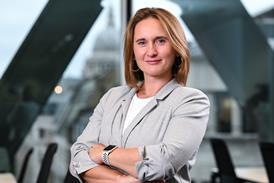
Catherine Foot, Standard Life Centre of the Future of Retirement
Catherine Foot, director of the Standard Life Centre for the Future of Retirement, said the cap would worsen the UK’s saving problem “by creating additional cost barriers that disincentivise employers from offering the scheme, with significant implications for their employees’ ability to save”.
She continued: “Ideally, the government would have waited to hear the initial evidence from the Pensions Commission, which will soon set out the evidence on the scale and nature of under-saving, before pressing ahead with this change.”
Gail Izat, managing director for workplace and retail intermediary at Standard Life, added: “Employers want to support their employees to save more and improve their financial prospects in retirement, as evidenced by the significant proportion who currently offer salary sacrifice schemes to their workforces…
“The changes will likely lead to many employees saving less over the next few decades than they would otherwise, with salary sacrifice currently one of the most straightforward and most effective ways for people to boost their pension.”