









The House of Lords has urged the government to rethink its approach to consolidating defined contribution (DC) pension schemes, in a blow to MPs’ efforts to finalise the Pension Schemes Bill.
The government is keen to ensure all DC auto-enrolment providers have at least £25bn in a “main scale default arrangement”, to increase their ability to diversify their investment portfolios and improve potential outcomes for savers.
However, peers have warned that the measures are too restrictive and on Monday voted to restore text to the bill allowing exemptions from the £25bn scale requirement.

This was despite Baroness Sherlock – who is leading the Pension Schemes Bill through the House of Lords on behalf of the government – saying that the Pensions Regulator and the Financial Conduct Authority had warned of complexities arising from such changes.
The Lords’ change, which will now be considered again by MPs, allows regulators to exempt providers from the scale test if “there is no reasonable prospect that consolidation of the scheme into another arrangement would be likely to improve outcomes for members”.
It also says schemes can also be exempted if “the trustees or managers of the scheme have demonstrated, on the basis of robust and independently verifiable evidence, that they are delivering good outcomes for members as a result of innovation”.
“As the government brings forward significant changes to the structure of this market, competition and innovation must be treated as central considerations, not afterthoughts.”
Baroness Stedman-Scott
Baroness Sherlock argued that the amendments could undermine the government’s policy intent and create “an unstable landscape for members and employers”.
She added that “both regulators have expressed their strong concerns to the department about this amendment”.
“Put simply, they think it is inoperable and exposes them to risk,” the baroness stated. “Working out exactly what the standard is that a regulator is supposed to apply could ultimately be a matter for the courts, adding years to the process and, ultimately, leading to increased costs for members while not delivering the benefits of scale.”
The Department for Work and Pensions set out its proposal for the scale test last month. It includes requirements related to governance and investment expertise. It has emphasised that the test will be developed through collaboration with the pensions industry and regulators.
Master trusts should prepare now for scale requirements, TPR says

The Pensions Regulator last month set out principles to help trustees evaluate whether their schemes are likely to meet the proposed scale thresholds and how they should evidence future growth. Read the full article.
Peers move to preserve innovation
Members of the House of Lords argued that their amendments were designed to preserve the government’s intention to scale up DC providers, but with additional flexibilities to ensure innovation and competition are protected.
Conservative peer Baroness Stedman-Scott stated: “As the government brings forward significant changes to the structure of this market, competition and innovation must be treated as central considerations, not afterthoughts. The government must not sacrifice these principles in pursuit of scale alone.
“Competition and innovation translate directly into better performance, better service and better value for those saving for retirement.”
“Not all pension funds have the in-house capability to manage alternative or illiquid assets. Just being large does not give them instant expertise.”
Baroness Altmann
Baroness Noakes, also a Conservative peer, added that consolidation “carries the risk that the market will ossify around those large firms”.
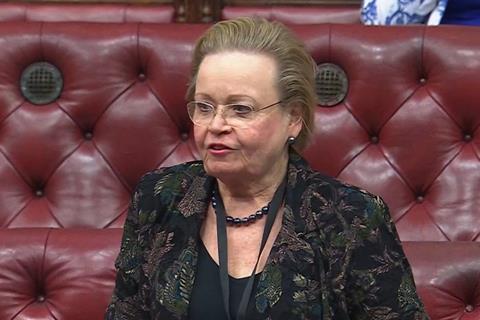
“Healthy markets need to be open to the challenge of new entrants, which can provide healthy competition to the incumbents,” the baroness continued. “In turn, that has the potential to deliver for pension savers in the long run. At the end of the day, the only thing that matters is what is good for savers…
“If those making the regulations do not secure this for the benefit of pension savers, no one else will.”
Baroness Altmann, a former pensions minister and an adviser to master trust Cushon, added: “Not all pension funds have the in-house capability to manage alternative or illiquid assets. Just being large does not give them instant expertise.”
She pointed out that Australian and Canadian pension funds – regularly held up as examples for the UK to follow – have “taken decades to build up this kind of ability”. This meant the government’s 2035 deadline for achieving compliance with the scale test “simply does not and cannot fit with the requirements that the government seek to impose on pension schemes”.