
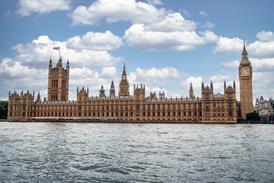








The House of Lords has rejected the government’s proposed ‘mandation’ reserve power for a third time, in a move that a former pensions minister has warned could place the entire Pension Schemes Bill at risk.
Late last night, the Lords rejected a proposed rewording of the reserve power that pensions minister Torsten Bell had put forward to the Commons just a few hours earlier.
Despite continued opposition from Conservative and Liberal Democrat MPs, Labour’s majority saw the change approved and sent back to the Lords. But during a vote yesterday evening, peers rejected the change by a margin of 234 votes to 152.
It is the third time the government has been defeated on the mandation clause, and comes despite repeated efforts from the Labour Party to limit the scope of the power to assuage concerns over its potential misuse.
“It is time that ministers stepped back from the brink and instead started listening to the legitimate concerns that are being raised.”
Steve Webb, LCP

Steve Webb, a partner at LCP and a former pensions minister, said last night (22 April) that “stubbornness” on this issue by the government could “put the whole bill at risk”.
“Ministers should recognise that there is a reason for the continued and cross-party opposition to their plans, which is that mandation is a fundamentally flawed policy,” Webb said.
“When schemes have voluntarily entered into a commitment via the Mansion House Accord process, the decision by the government to try to enforce this pledge through legislation is not acting in good faith. Mansion House signatories are clear that they will strive for these targets provided that they think doing so is in members’ interests, and trustees and providers will rightly resist any attempt to over-ride that judgment.
“There is so much that is good in the Pension Schemes Bill, it would be wholly unacceptable if the government’s stubbornness – on a power that they say they don’t even plan to use – put the whole bill at risk.
“It is time that ministers stepped back from the brink and instead started listening to the legitimate concerns that are being raised.”
Third time unlucky: revised power rejected again

The government had proposed further limitations to its mandation reserve power in a bid to satisfy the House of Lords after two defeats over the controversial element of the Pension Schemes Bill.
Work and pensions secretary Pat McFadden tabled fresh amendments to the legislation, bringing forward the reserve power’s sunset clause to 2032 and ensuring that all elements of the power would cease to apply by 2035, regardless of whether or not it has been exercised.
The power includes asset allocation limits in line with the Mansion House Accord, as with the previous amendment, but also includes new provisions ensuring the power can only be used once.
A further amendment means the entire reserve power will be repealed at the end of 2035. A new sunset clause means the mandation power will be removed earlier, in 2032, if it has not been used. This is in line with a proposal put forward by trade bodies Pensions UK and the Association of British Insurers in March.
“This timeline reflects that, once the cultural shift has occurred and the impacts of the Mansion House Accord are embedded, the collective action problem falls away at that point,” Bell stated. “Other elements of this bill – greater scale, the impact of the Value for Money framework – will also help sustain the change.”
Addressing parliament yesterday (22 April), pensions minister Torsten Bell said the reworded legislation reflected “a reserve power that is highly constrained and narrowly focused on solving a very specific problem”.
The House of Lords rejected the initial attempt at compromise on Monday night, with peers criticising the “poisonous” reserve power and urging its removal.
Opposition parties dissatisfied with new mandation wording
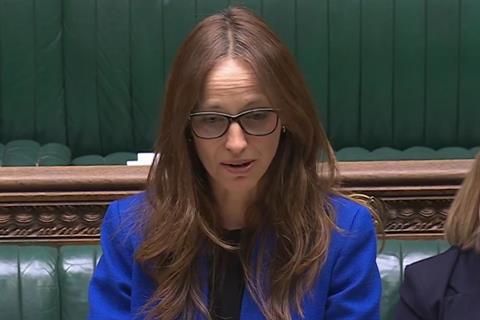
Despite the government’s move, the Conservative Party maintained its strong opposition to the mandation power in principle. Helen Whately, the shadow work and pensions minister, contested Bell’s consistent argument that there was a “collective action problem”.
She said that, while the pensions industry agreed that there was a lack of investment in domestic assets and markets from UK pension schemes, it disagreed with the solution of mandation.
“A collective action problem is not, in itself, a justification for state compulsion,” Whately said. “It is a signal that incentives are misaligned. And when incentives are misaligned, the answer is not to override the system, it is to fix it and make it rational to be a first mover or early adopter.”
Steve Darling, the Liberal Democrat spokesperson for pensions, accused Bell of having “sneaked in” a “Trojan horse” of mandation into the Pension Schemes Bill. While he welcomed the latest amendment as having “cut off a couple of legs”, he urged the government to be more proactive in bringing appropriate assets and opportunities forward for pension schemes to consider investing.
“The primacy of trustee fiduciary duty must be made clear. A structure that subordinates that duty is not acceptable, which means no mandation.”
Baroness Sharon Bowles
Darling said: “What we should be doing and what the government should be doing is shaping the market appropriately through [policies] so that there is a pipeline of opportunities for investment.”
Speaking in the House of Lords last night, Baroness Sharon Bowles, a Liberal Democrat peer, said: “The primacy of trustee fiduciary duty must be made clear. A structure that subordinates that duty is not acceptable, which means no mandation.”
Conservative peer Baroness Lucy Neville-Rolfe added: “The proposal has made the government unpopular in the City and, as an ex-businesswoman and ex-pension trustee, I urge ministers to think more radically and get rid of the power altogether, even in its constrained form.”
‘A step too far’

Elisabeth Storey, head of pensions at RSM UK, said: “Offering a compromise that still allows mandation once is not the best outcome for pensions savers, and does nothing to address the arguments against these powers being included in the bill in the first place.
“If the government produces UK investment opportunities that are attractive for private pension scheme investment, trustees will automatically want to ensure their members benefit from these. Inclusion of this power in clause 40 of the Pension Schemes Bill has always seemed a step too far, has very little support from the pensions industry, and could ultimately erode public trust in the UK pensions system.”
Scale test amended to aid innovation
Elsewhere in the bill, the government has also countered the House of Lords’ amendments relating to the scale test, which aims to get defined contribution pension schemes to at least £25bn in size.
The new proposal, presented by Bell in parliament, requires secondary legislation shaping the scale test to have regard for innovation, competition, and member outcomes.
Bell said the government would also commit to publishing a report within 12 months of the Pension Schemes Bill receiving Royal Assent that would look at innovation in the market and “any barriers that may exist to preserving these features”.
In response, Whately said the government’s new amendment was “not perfect, but it is a significant step in the right direction”. Peers in the House of Lords agreed and approved the amendments.
Earlier this week, peers attempted to restore previous amendments to the bill that would have allowed exemptions to the £25bn size requirement. The House of Commons rejected this move and voted through the government’s new amendment, and this was approved by the Lords last night.