













The debate over automatic enrolment reform highlights the difficulty of improving retirement outcomes for low earners. As fresh analysis from the Pensions Policy Institute makes clear, even widely supported changes involve trade-offs.
Perhaps the bigger question is whether the pensions system is trying to solve the right problem. Adequacy matters, but so does the inequality built into retirement outcomes.
Pension adequacy is not simply a later-life financial issue; it’s about fairness, aspiration, and social mobility. If under-saving is concentrated among those with the least room to manoeuvre, the system is not just storing up a retirement problem. It is entrenching disadvantage across generations.
What the new Pensions Commission is saying
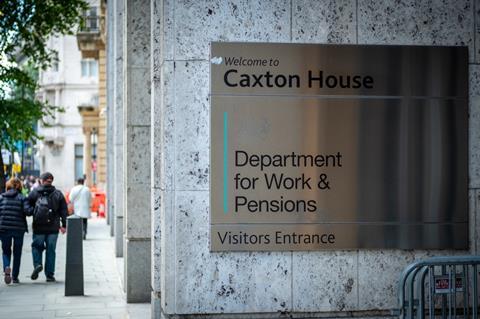
The Department for Work and Pensions published its interim report – Pensions 2050: Evidence and Future Priorities – in May, outlining critical UK retirement challenges including widespread under-saving and demographic shifts.
It recognised that “women, carers, the self-employed, and many ethnic minority groups continue to face structural barriers that the system has not yet overcome.” It also highlighted acute under-saving among low and middle earners, women and the self-employed, as well as weaker outcomes for carers, disabled people and ethnic minority groups.
Crucially, it framed adequacy as a shared responsibility between the state, employers and individuals. It also accepted that automatic enrolment must evolve, while the state pension remains the cornerstone of retirement income for most people.
The scale of the problem is substantial: around 15 million people (43% of the working-age population) are under-saving for retirement. The question is no longer whether there is a problem, but whether the response will be proportionate.
Looking ahead to 2027

“The Pensions Commission… must draw on economic data, behavioural insight, and lived experience to understand how different groups interact with the system, where barriers exist, and how reform affects individuals, employers and the state.”
In a diverse, multi-cultural society, retirement is not experienced in a single uniform way. The system cannot assume that people move neatly from education to full-time work, to retirement while building pension wealth in a straight line. For many, that path does not exist.
Some retirement plans may involve intergenerational support, property, overseas assets or savings outside formal UK pensions.
That makes the adequacy debate more nuanced. It is not just whether people are saving enough, but their motivations for saving or not saving. For some, low saving reflects conscious trade-offs. For others, it reflects constraints such as low or volatile income, caring responsibilities, unsuitable products, or low confidence in the system.
The Pensions Commission’s task is therefore not simply technical, but social. It must draw on economic data, behavioural insight and lived experience to understand how different groups interact with the system, where barriers exist, and how reform affects individuals, employers and the state.
What the Commission should now test
If the final report is to matter, it must move beyond diagnosis and test reforms proportionate to the scale of the problem.

- Finish automatic enrolment reform: The 2017 review proposed lowering the age threshold and removing the lower earnings limit. The powers now exist, so why not implement it?
- Correct obvious structural distortions: Policymakers already know many of the weak points, such as carers’ credits, the earnings trigger, tax relief for non-taxpayers, pension sharing on divorce, and the interaction between pensions and family policy. These deserve renewed attention.
- Explore a tiered auto-enrolment contribution design: This could involve testing a model in which employee and employer contributions vary by earnings. Lower earners would contribute less, with employers making up the difference, while higher earners would contribute more and employers less – with the minimum total contribution still met in all cases.
- Design pensions properly for the self-employed and for non-linear work: The commission should examine default or quasi-default mechanisms through the tax system and more portable savings pathways for people with fragmented careers.
- Build a trusted guidance infrastructure for the artificial intelligence era: Public guidance, clearer signposting, and quality-assured digital tools will matter more, not less, as AI-generated financial content proliferates.
- Be more honest about data blind spots: Better qualitative research and engagement with communities whose saving behaviour is less visible would make the policy debate more grounded and less technocratic.
- Ensure incoming pensions infrastructure works for savers, and not just on paper: The next wave of pensions reform must do more than exist in statute. It must work in practice and be understood by savers and employers.
Ieuan Solanki is a manager at professional trustee firm Vidett.