








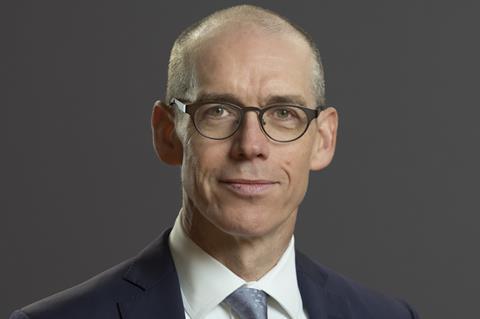
Paul Sweeting, president of the Institute and Faculty of Actuaries, proposes three challenges for the Pensions Commission – and the wider retirement sector – to consider as the work to improve adequacy continues.
The dust has now settled on the publication of the Pensions Commission’s interim report. It is therefore inevitable that we are all starting to think about how the evidence will be evaluated and the many challenges navigated.
Meaningful change is not impossible. We must not forget the success of previous efforts. For example, it is two decades since the Turner Commission built a robust and sustained consensus for long-term thinking and delivery of pensions reform; it has stood the test of time.
The challenge for this Pensions Commission is to repeat that success, albeit against a more challenging fiscal and economic environment, and – arguably – a more fractious political environment as well.
While there is no silver bullet in sight, I offer three challenges to consider as pragmatic suggestions.
Focusing on the long term

First, we need to look to the long term. A key lesson from the Turner Commission was that reforms like auto-enrolment, which transformed workplace saving, are possible, but they need sustained focus to gain traction.
If the Pensions Commission is to make an impact, we need to see a level of commitment to long-term policymaking that allows policy to endure over multiple electoral cycles.
The onus here is not just on the commission; public consent will be key. Concepts such as intergenerational fairness are easy to talk about but hard to deliver.
But without the buy-in of both young and old, policies are liable to become weaponised in party politics. This is why the Institute and Faculty of Actuaries (IFoA) has been supporting ways to involve the public, such as through citizens’ assemblies, to evaluate the trade-offs that society may have to make.
I hope that the Pensions Commission is open to this sort of innovative thinking.
What does success look like?
Second, we should base our conclusions on where we want the pension system to be in the future, not just on current circumstances. This is not easy – as the punchline to an old joke goes, if I wanted to get there then I wouldn’t have started from here.
I have worked with the pensions systems of countries around the world. All face challenges, some like those in the UK and others different. And many have had to deal with legacy systems and vested interests.
We can and should learn from international experience, but in the end, reforms need to be adapted to the specific ecology of UK pensions.
Over 100 years ago Winston Churchill and David Lloyd George pioneered the Old Age Pension Act 1908, which introduced the UK’s first state-funded retirement scheme. It is time for bold decisions to be made again that transform the pension system for the modern world.
Getting the full picture
Third, while the Pensions Commission has a broad remit, many external factors affecting pensions are out of their control. Regardless, we need to think in terms of retirement as a whole when introducing any recommendations.

For example, an increasing number of retirees are now renters rather than homeowners. This has clear implications on both their income needs and their access to capital. This is before we even consider other non-pension savings vehicles.
But now more than ever, there is no single pathway to retirement. What we face instead is retirement as a process rather than an event, the rise of the gig economy, and an increasing proportion of self-employed workers ignored by features such as auto-enrolment, to name but a few.
From the IFoA’s own research, we know that women are more likely to retire with less money in their pension pots compared to men. For example, taking maternity leave, moving from full to part-time work, or even taking a career break for unpaid caring responsibilities.
Addressing these issues requires a collaborative effort between industry, government and consumer representatives, all considering how pensions work in the wider world and in the broader context of retirement.
There are significant challenges ahead for the Pensions Commission. History has shown us that success is possible, but we cannot underestimate the effort that will be needed to get there.
Paul Sweeting is president of the Institute and Faculty of Actuaries.