









The US government has started 2026 in controversial style, deposing the leader of Venezuela and demanding control over the Danish autonomous territory of Greenland. How can pension schemes assess these events?
The new year has started with more geopolitical events that have shaken markets. On 3 January, the US carried out a major military operation in Venezuela, with strikes around its capital city Caracas. President Nicolas Maduro and his wife Cilia Flores were captured and taken to the US to face charges including “narcoterrorism”, which they both deny.
This was swiftly followed by US president Donald Trump renewing his campaign to take over Greenland, which is an autonomous territory of Denmark. European leaders have strongly criticised the idea, but the US has threatened to impose trade tariffs on the UK and the European Union if it does not get its way.

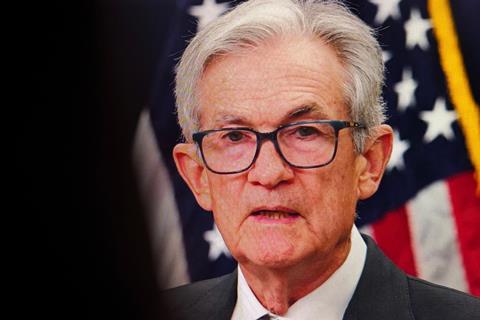
Closer to home, the independence of the Federal Reserve is being called into question. Its chair, Jerome Powell, has been threatened with criminal charges relating to renovation work on the Fed’s headquarters – although Powell has stated that the move was a “consequence of the Federal Reserve setting interest rates based on our best assessment of what will serve the public, rather than following the preferences of the president”.
US equity markets are down so far this year, but other assets have proven more resilient in the short term, with the FTSE 100 hitting a record level earlier in the month.
Investment experts have urged investors to keep calm and plan for multiple scenarios to ensure they are fully prepared if tensions start to impact on financial markets.
Political direction ‘sits uneasily with ESG’
Barry Jones, chief investment officer at Isio, said the US had become “an increasingly uncomfortable contradiction for UK pension trustees” since the start of Trump’s second term. This was particularly the case with regard to environmental, social and governance (ESG) concerns.
“Aspects of the political and regulatory direction over the past year sit uneasily with ESG beliefs that many schemes have formally adopted in recent years.”
Barry Jones, Isio
“On the one hand, it represents the majority of global equity market opportunity and continues to deliver strong returns,” Jones said. “On the other hand, aspects of the political and regulatory direction over the past year sit uneasily with ESG beliefs that many schemes have formally adopted in recent years.
“Markets have remained remarkably calm in the face of significant geopolitical developments, and from a purely financial perspective there are clear tailwinds for US corporates. Pro-business policies, fiscal support and capital incentives all strengthen the investment case. But fiduciary duty does not exist in isolation from the beliefs and frameworks trustees have committed to on behalf of members.”
However, simply walking away from US investments was ”not realistic”, Jones said, as this would “materially reshape portfolios and reduce diversification”.
“As a result, trustees are being forced to think more carefully about how ESG principles are applied in practice, rather than relying on broad assumptions that held true in a more stable global environment,” the CIO explained. “This is less about making dramatic allocation shifts and more about reassessing trade-offs.
“Trustees need to be clear-eyed about where engagement, selective exposure or tilting can genuinely align portfolios with ESG objectives, and where tensions may need to be acknowledged rather than avoided. The US may be too big to ignore, but it is also too important not to scrutinise.”
Short-term or long-term impacts?
Despite the escalating tension between the US and Europe over Greenland, such geopolitical episodes are “rarely game-changing” for investors, according to Hymans Robertson’s Chris Arcari, head of capital markets. However, the dispute could create a wider financial market contagion if it leads to “the weaponisation of markets”, he said.
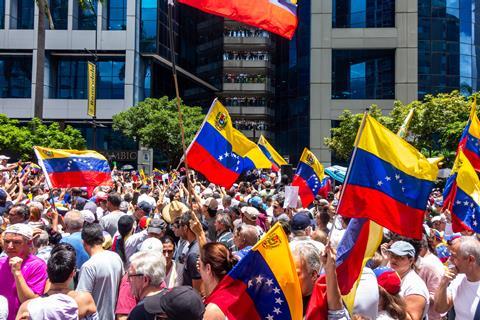
While the Venezuelan situation was unlikely to negatively affect markets – indeed, Arcari argued that the US presence there could lead to increased oil supply – other issues could have a bigger impact.
He cited the potential for regime change in Iran, as the Strait of Hormuz – which passes between the Arabian peninsula and Iran – was a significant route for oil trading.
“However, managing a portfolio for a single upside or downside scenario is often suboptimal,” Arcari continued. “Investors must also weigh the long-term opportunity cost of diversification, striking the right balance between risk-adjusted and absolute returns.
“Scenario-testing helps identify portfolio vulnerabilities under different conditions and uncover untapped diversification opportunities… We recommend scenario-testing portfolios against varied growth and inflation outcomes to uncover vulnerabilities and diversification opportunities.”

Alison Fleming, pensions partner at PwC, agreed that diversification and scenario testing were essential, in comments for Pensions Expert’s Global Investment Outlook at the start of January.
“Geopolitics is always an underlying risk, but particularly now as it seems there are fundamental global shifts happening in trade, defence, and debt,” Fleming said. “One way for schemes to mitigate the risk is to ensure they have appropriate diversification and hedging strategies.
“Scenario analysis can also support risk mitigation. Often, portfolios are predicated on the most recent market environment, whereas scenario analysis can help understand how the portfolio could be impacted by other historical regimes. Understanding the potential impact and planning for these scenarios can help schemes to act quickly to reduce risk and capture opportunities.”
Global investment outlook: Navigating a complex landscape

From the impact of US trade tariffs to the continued growth of private markets, and from climate change investing headwinds to the artificial intelligence megatrend, there have been plenty of challenges and opportunities for investors to navigate over the past 12 months. Read the full article.
Have a ‘plan B’, investors urged
In a recent update, senior strategists from the BlackRock Investment Institute said the current environment required a “nimble approach” and urged investors to have a “plan B”.
“This environment calls for a nimble approach and plan B for portfolios based on scenarios when many potential outcomes are possible.”
BlackRock Investment Institute
“Developments like policy uncertainty or fiscal concerns mainly transmit through the cost of capital channel by lifting risk premia, in our view,” wrote Jean Boivin, Wei Li, Nicholas Fawcett, and Roelof Salomons in a report published this week.
Investors have been ”demanding more compensation for the risk of holding long-term US bonds”, they explained, due to concerns about “fiscal sustainability and debt servicing costs”, even before the developments regarding Jerome Powell.
“What matters for our positioning is whether a development has a meaningful, lasting impact on… markets broadly,” the authors of the report said. “We would lean against moves where we don’t see a sustained impact, such as short-term market reactions to geopolitical events that ultimately prove contained.
“This all reinforces why this environment calls for a nimble approach and plan B for portfolios based on scenarios when many potential outcomes are possible.”
Longer term, BlackRock’s experts said they were “pro-risk”, encouraged by the longer-term investment theme of artificial intelligence developments. This theme had further to run, they said, “even as geopolitical fragmentation and potential diminishing trust in institutions could lead to a reevaluation of global risk premia”.