











From the impact of US trade tariffs to the continued growth of private markets, and from climate change investing headwinds to the artificial intelligence (AI) megatrend, there have been plenty of challenges and opportunities for investors to navigate over the past 12 months.
Pensions Expert asked consultants and asset managers for their views on the continued dominance of US equities in investment portfolios, how to mitigate geopolitical risks, and whether private markets have been overdone.
AI continues to dominate as a theme, but opinions are split as to whether this will become a broader trend affecting more companies or poses a structural risk to the US economy. Meanwhile, private markets assets – particularly those that can help hedge inflation – will continue to be important.
Click the links to jump ahead in the article.
- Concentration risk in US and global equity allocations
- Geopolitical risk in investment portfolios
- Top investment opportunity for 2026
- Private markets supply and demand
Investment performance in 2025
| Index/asset class | 2025 performance |
|---|---|
| FTSE All-Share (UK) | +18.7% |
| S&P 500 (US) | +16.6% |
| Nikkei 225 (Japan) | +28.1% |
| CAC 40 (France) | +10.2% |
| DAX (Germany) | +22.3% |
| Hang Seng (China) | +30.6% |
| Gold (£ price) | +49.1% |
| Bitcoin ($ price) | -15.8% |
| Global bonds ($) | +8.4% |
| Private equity ($) | +11.8% |
Notes: Global bonds performance is the Bloomberg Global Aggregate index; private equity is the MSCI All Country Private Equity index. Equity indices are shown in local currency terms.
Concentration risk
We’ve seen some pension schemes pivot away from the US to tackle concentration risk. Will this continue in 2026? What role does the US play in portfolios over the longer term, given political risk?

Alison Fleming, pensions partner at PwC: “There are alternative ways to weight equity portfolios than by market capitalisation. The US dominance of global equity indices is not new, but has been pushed to new highs by gains in the largest stocks.
“The US will continue to play a major part in portfolios given the breadth and depth of the market, albeit some are certainly tilting away from a market capitalisation weighting.”

Barry Jones, chief investment officer at Isio: “Defined benefit schemes, supported by strong funding levels, have been taking profits and reducing overall equity exposure, which naturally helps address concentration risk. Defined contribution and Local Government Pension Scheme investors have looked for ways to stay invested while managing that risk, such as put protection strategies, rebalancing regional weightings, or tilting towards value factors.
“Political risk is always present, but the pace of policy change seen after the One Big Beautiful Bill means investors either need a genuinely long-term mindset or they need to find high-quality and well-rewarded assets that offer diversification at a time when the US artificial intelligence and technology theme continues to dominate.”

Alastair Greenlees, head of investment strategy UK at Van Lanschot Kempen: “The US dominates public equity markets, but UK defined benefit schemes increasingly require less equity exposure and are becoming more credit-focused investors as they look to either de-risk fully or run on more robustly. This grants an ability to be more geographically agnostic – or indeed locally biased – and given this trend is unlikely to slow, we expect the practical need rather than geopolitical concern to likely continue driving a rotation away from the US.”
How pension funds are handling US equity concentration risk

With more of the US market’s fate tied up in a handful of enormous technology stocks, investment teams are having to reconsider their exposure, as Jon Yarker reports. Read the full article.
Geopolitical risk
How much of a challenge is geopolitical risk to portfolios? How can pension schemes mitigate this?
Alastair Greenlees (Van Lanschot Kempen): “The first step of mitigation is understanding the real nature of the risk and in both papers, we noted a particular quirk of UK schemes: major geopolitical events, such as a potential escalation between the US and China, could prove to be positive for UK schemes funding and deficit levels, with the right portfolio positioning and circumstance.”
“Understanding the potential impact and planning for [different] scenarios can help schemes to act quickly to reduce risk and capture opportunities.”
Alison Fleming, PwC
Alison Fleming (PwC): “Geopolitics is always an underlying risk, but particularly now as it seems there are fundamental global shifts happening in trade, defence, and debt. One way for schemes to mitigate the risk is to ensure they have appropriate diversification and hedging strategies.
“Scenario analysis can also support risk mitigation. Often, portfolios are predicated on the most recent market environment, whereas scenario analysis can help understand how the portfolio could be impacted by other historical regimes. Understanding the potential impact and planning for these scenarios can help schemes to act quickly to reduce risk and capture opportunities.”

Barry Jones (Isio): “The US dollar has been the world’s reserve currency, and holding dollar assets has been the natural hedge during geopolitical uncertainty. The current US administration’s preference for a weaker dollar, combined with the unusual pattern in the first half of the year where both the dollar and markets fell during geopolitical tension, makes this harder to rely on…
“For UK pension schemes, geopolitical events often feed through via inflation shocks, as seen in the cost-of-living surge following the Russia and Ukraine conflict… We continue to prefer investments with strong fundamentals and tangible underlying assets for resilience. In defined contribution schemes, direct inflation hedging is difficult, so real assets play an important role in the growth phase, but there is a live question about whether more explicit inflation protection is needed for those approaching or in retirement.”
Top opportunity
What is your number one investment opportunity for 2026 that you think more pension schemes need to explore?

Barry Jones (Isio): “Many traditional asset classes now look expensive and rely heavily on exceptional future growth from the artificial intelligence theme to justify valuations. Finding rewarded risk with genuine security feels more compelling in this environment, especially where the investment brings real diversification and clear transparency over the assets being lent against. Fund finance stands out, offering institutional counterparty exposure, yields of inflation plus 3%, and a relatively sheltered place to wait for better reinvestment opportunities in higher risk strategies.”
Alison Fleming (PwC): “It depends on scheme objectives, but bonds will still give sufficient nominal returns for many, especially if there were an event that led to higher credit spreads. For generating upside, long-term equity call options are a capital-efficient way to get uncapped exposure to equities in return for a premium.
“For schemes with longer investment horizons, there may be opportunities in infrastructure, where we are currently seeing discounts to net asset value. Potential drivers of return include consolidation in the sector and a tailwind from falling yields.”
Alastair Greenlees (Van Lanschot Kempen): “The key strategic question for UK defined benefit pension schemes today is how much value is truly at stake. Should they run on or not? The opportunity lies in recognising that the odds may be significantly more favourable for existing schemes, their members, and their sponsors than they may currently realise.”
Private markets
Is there too much money going into private markets, or are there still sufficient opportunities at attractive prices?
Barry Jones (Isio): “Over the past two decades, there has been a structural move from public to private companies, and with banks stepping back from some traditional lending areas, the universe of investable private market opportunities has expanded. Fund managers have created effective ways to access these areas. Provided equity is fairly valued, debt is well secured with strong covenants, and spreads compensate for illiquidity, private markets remain suitable for long term investors. Due diligence is essential given the nature of the assets.
“The key macro concern is leverage. Private companies tend to operate with higher gearing than public companies, and their underlying assets can be harder to analyse. More leverage at a global level means more vulnerability in a downturn, particularly for equity investors.”
Alison Fleming (PwC): “Private credit has a place in portfolios despite some well-publicised failures. While the Bank of England is now carrying out stress tests on the industry, we note that this reflects the growth in the sector. The concept of lending by non-bank investors remains sound, and a high level of due diligence and diversification is called for by the investment management industry. Schemes should carefully consider their investment horizon and liquidity requirements.”
In Depth: Regulators begin work on private markets as interest grows
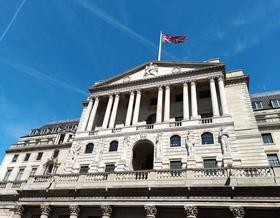
The Pensions Regulator and the Bank of England are launching separate exploratory exercises focusing on private markets, as pension scheme interest grows and the government continues to push for more domestic allocations. Read the full article.
Alastair Greenlees (Van Lanschot Kempen): “Public equity markets hold nearly $130trn (£97trn) in assets and more than $100trn in debt. By comparison, private markets, though the estimates are imprecise, total approximately $14trn-$16trn across equity and debt. Even with strong growth, the sheer scale difference suggests meaningful opportunities available in the private markets. The key, of course, is to be discerning and avoid merely participating in the trend for its own sake.”
Alex Ralph, co-portfolio manager at Nedgroup Investments: “Despite the sanguine backdrop, we do still find opportunities on a sector and bond basis. We ran an overweight in autos for much of 2025, which provided decent excess return. We have since cut our position and with that started to dip our toe in the much-maligned high yield chemical sector.
“Our first holding is a solid BB-rated company called Celanese, with decent yield over five years, and there may be further possibilities to build on the position. We had run zero exposure to the sector in 2025 and it [lost] 4%… versus a 6.5% index return. A large underperformer.”
Albane Poulin, head of private credit at Gravis: “The best opportunities for 2026 are focused on mid-market infrastructure debt, which offers superior risk-adjusted returns. This segment focuses on smaller, more complex projects that tend to be less crowded and provide higher spreads, roughly between 350 and 550 basis points.”
David Aulja, multi-asset fund manager at Invesco: “Within equities, we hold a neutral stance between US and developed ex-US markets. However, non-US markets are increasingly appealing, particularly for foreign investors. On one hand, US earnings momentum continues to outperform other markets, mostly driven by technology, favouring US equities. On the other hand, our bearish view on the dollar, driven by narrowing yield differentials for the greenback and positive surprises in global growth, is generally seen as a strong tailwind for international unhedged equity exposures.”
Outlook 2026

As 2026 begins, Pensions Expert’s special report explores the biggest potential themes for the new year across defined benefit, defined contribution, and investment.
- 1
- 2
- 3
- 4
- 5
- 6
 Currently
reading
Currently
reading
Global investment outlook: Navigating a complex landscape