








The Pensions Regulator (TPR) must put members and fiduciary duty considerations at the centre of its corporate strategy, according to the Association of Member Nominated Trustees (AMNT).
The regulator has published a consultation on updating its corporate strategy, which will set out its areas of focus for the next five years.
The AMNT welcomed the regulator’s willingness to consult with the industry, its use of the term “members” rather than “savers”, and its overarching vision of helping people achieve a sustainable income in retirement.
“Constructive engagement between TPR and representative organisations can play an important role in improving standards of trusteeship, supporting member representation and promoting good governance.”

It also backed the regulator’s plans to modernise data and digital capability, as well as recent guidance supporting trustees as they navigate new choices.
However, the association warned that the strategy must do more to address unequal retirement outcomes, protect member representation and keep trustees’ fiduciary duty to members at the centre of regulatory activity.
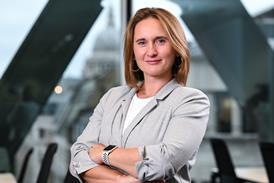
Lewis Brown, vice chair of the AMNT, said: “The challenges identified within the strategy will require ongoing collaboration between regulators, trustees, employers, advisers and industry bodies.
“AMNT believes that constructive engagement between TPR and representative organisations can play an important role in improving standards of trusteeship, supporting member representation and promoting good governance across the pensions sector.”
Adequacy and retirement pathways
However, the trustee representative body also said TPR’s strategy did not go far enough in addressing the gender pensions gap and other structural causes of unequal pension outcomes.

It argued that women are disproportionately affected by lower earnings, part-time working and caring-related career breaks, which can compound over decades into significantly lower retirement incomes.
The association also said TPR’s vision of a “sustainable income” should explicitly include dignity, adequacy and financial wellbeing in retirement, rather than focusing only on a basic adequate income.
The consultation acknowledged data showing that 14.6 million people are not on track for an adequate retirement income, which the AMNT said must be addressed.
The AMNT also said decumulation and collective defined contribution (CDC) schemes were not sufficiently prominent in the strategy, despite major developments expected over the next five years.
It highlighted a member communications and literacy gap, warning that many members believe they “have a pension” when they actually hold savings pots with no clear income pathway.
Member representation ‘must not be diluted’

Meanwhile, trustees raised concerns that the strategy focused on professional trusteeship while giving too little recognition to member-nominated trustees.
It said member representation was a defining strength of the UK trust-based pensions model and must not be diluted as consolidation accelerates.
The association warned that larger or consolidated schemes do not automatically produce better governance or member outcomes, and said a smaller number of professional trustees could create risks for member representation.
It called on TPR to increase assurance activity on conflicts of interest in master trust boards and strengthen oversight of professional trustee firms and administrators where market concentration is growing.
The AMNT also said TPR should issue clearer trustee capability expectations and stronger training pathways for all trustee types, not just professional trustees.
The response urged caution over framing pension schemes as vehicles for UK economic growth, arguing that any such language must not imply that trustees’ fiduciary duty to members is subordinate to wider political or economic objectives.
Brown concluded: “The document conflates fiduciary duty with UK growth objectives in places, uses the unexplained phrase ‘independent’ trustees in its concluding paragraphs, omits CDC from its discussion of future challenges, and fails to acknowledge the role of investment consultants and managers in supporting trustee decision-making.”