









As new prime minister Andy Burnham sets out his plans for the UK, Janice Turner, honorary president of the Association of Member Nominated Trustees (AMNT), contrasts his devolution approach with the consolidation of defined contribution pension schemes.
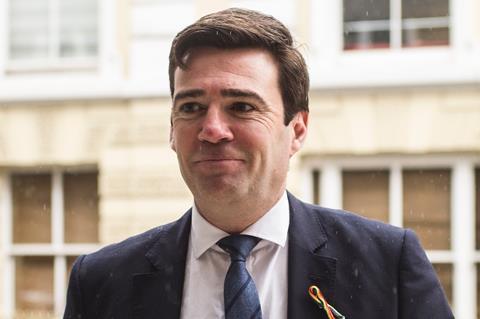
As Andy Burnham settles into Number 10, there has been much discussion in the media about his philosophy of “Manchesterism” and what it means.
So what is it about? Burnham told ITV News before he won the Makerfield by-election that the country needs “more interventionist” politics and economics, and that Manchesterism is “the end of neo-liberalism. The end of trickle down, actually, that didn’t trickle much down to Makerfield or other places like it”.
Since the election he has made clear that he intends to devolve more power to the people, away from the centre. The core idea is straightforward: people should have more say over the systems that shape their lives, and that principle has a clear relevance for pensions.
In this context of greater power to the people, the concentration of power in the governance of master trusts makes the evolving master trust structure look anachronistic.
The concentration of power in DC
The direction of travel in UK defined contribution (DC) pensions is towards ever-larger schemes, with decision-making concentrated in a relatively small number of master trust boards.
LCP’s latest ‘Powerbrokers’ report estimates that the trust-based DC market is concentrated to fewer than 50 trustees who oversee more than half of all occupational DC assets. That’s more than £160bn across the seven largest master trusts. In some cases, boards comprise only four or five people.
DC consolidation: Four providers hold 70% of assets, study finds

A quartet of pension providers holds more than 70% of assets and serves 74% of members across a study of the UK’s largest defined contribution schemes, according to a study from Howden Employee Benefits. Read the full story.
As consolidation continues and the market moves towards a smaller number of very large arrangements, increasingly described as megafunds, questions about governance, accountability, diversity, and representation become even more important.
In essence, it comes down to this. With just four or five people running an enormous scheme and the same trustee companies on the boards of multiple schemes, it is hard to see how diversity of thought will flourish. These trustees will undoubtedly be trying to do their best for the schemes that employ them. But, and this is the crucial part, they are likely to come from similar professional and often social backgrounds. Diverse, in general, they are not!
These are not abstract issues. Master trusts serve millions of savers, yet members have very limited influence over the schemes that hold their retirement money. In most cases, it is the employer that selects the pension arrangement, and an individual member cannot simply choose another provider without giving up the employer contribution.
This is not a normal consumer market in which dissatisfied customers can readily shop around. It is a system in which people are largely required to accept decisions made on their behalf. That is precisely why member representation matters.
The importance of the member voice
The AMNT has consistently argued that member-nominated trustees (MNTs) should be a big part of the answer. MNTs bring something distinctive to pension governance: independence, lived experience and a direct stake in long-term outcomes.
They are there not as a symbolic presence, but as people who can ask difficult questions, bring member perspectives into board discussions and challenge accepted assumptions when necessary. That is not a criticism of professional trustees, many of whom are highly skilled and deeply committed. But good governance does not depend on technical expertise alone.
“The larger and more remote schemes become, the easier it is for the people whose money is at stake to disappear from view… [Governance] must evolve to reflect the interests of the millions of members whose savings are being consolidated into these arrangements.”

This matters all the more when scale is increasingly presented as the solution to almost every pensions policy challenge. Bigger schemes may have advantages such as greater bargaining power, access to a wider range of investment opportunities and lower unit costs. But scale also has consequences.
The larger and more remote schemes become, the easier it is for the people whose money is at stake to disappear from view. If the future is one of megafunds, then governance cannot simply remain an internal matter for providers, advisers and a narrow group of professional trustees. It must evolve to reflect the interests of the millions of members whose savings are being consolidated into these arrangements.
There is nothing impractical about stronger member representation. A number of UK schemes already show that it can work in large multi-employer settings, including the Universities Superannuation Scheme, TPT, and the DC section of the Railways Pension Scheme.
International experience points in the same direction. Australian superannuation funds have long operated with substantial member and employer representation on boards. The issue is not whether this can be done. It is whether there is sufficient will to do it. Good practice is already out there.
The risks of consolidation
There is also a wider concern about what pension consolidation may mean in practice. Recent work on the DC market has raised the question of whether increasing scale, combined with a more formal Value for Money framework, could encourage greater conformity across schemes.
If a small number of very large master trusts are shaped by similar regulatory expectations, advised by the same firms and governed by a relatively narrow pool of trustees, there is a real risk of herd behaviour.
That risk should not be underestimated. Pensions need challenge, plurality of thought and genuine independence – especially at a time when government has introduced a mandation reserve power to direct pension assets towards particular economic or policy goals.
From the AMNT’s perspective, this is the heart of the issue. Pension savers should not be passive passengers in a system run entirely by providers, professional trustees and policymakers. They are not an incidental part of the system; they are the reason it exists. Yet too often, member interests are spoken about rather than spoken for. That is not healthy for trust, and it is not healthy for accountability.

If policymakers believe that consolidation into larger master trusts or megafunds is in members’ interests, then they should also accept the governance implications of that choice. Scale cannot become an excuse for greater distance from savers. On the contrary, the larger and more powerful pension institutions become, the stronger the case for ensuring that members have a voice within them.
If Manchesterism is to be applied to master trusts, we should expect this governance of captive markets of scheme members by the financial services industry to be reviewed. ‘Power to the people’ has to mean getting member-nominated trustees back on the boards, and fast.
After all, we don’t want to “look back in anger” when the dust of these monumental changes has settled.
Janice Turner is honorary president of the Association of Member Nominated Trustees.