










Martyn James, director of investment at Now Pensions, explains how the £7.1bn master trust is allocating to affordable and social housing as part of its private markets strategy.
In 2022, Better Society Capital (BSC) teamed up with Cardano to run a request for proposal (RFP), seeking a strategy that could help tackle the UK’s housing crisis while also generating a sustainable investment return. The two organisations aimed to put up to £195m to work through the strategy.
Cardano – which was bought by Mercer in 2024 – runs the Now Pensions defined contribution (DC) master trust, and so the work with Better Society Capital directly informed the pension scheme’s first investment into a social and affordable housing fund. It also helped lay the foundations for its broader private markets strategy.
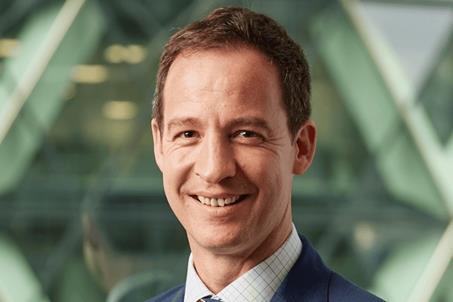
Martyn James: We look after the pension savings of millions of members across the UK, on behalf of tens of thousands of workplaces from different industries, and manage over £7bn of those savings.
Our members tend to have relatively small pot sizes on average, and consequently the state pension makes up a significant proportion of their income in retirement. Membership spans the whole of the UK, with a substantial number on lower incomes or working part-time.
When we invest in UK private markets, as long as the financial return is expected to be good, we also seek to make investments in assets that are tangible and relevant to members in communities across the country and have a real-world social outcome.
Mansion House and private markets
Q: The Mansion House Accord has set a clear direction for DC schemes investing in private markets. In practical terms, what does meeting that commitment look like for Now Pensions?

James: We started exploring private markets before the Mansion House Accord came into place. Our view has always been that these investments can enhance long-term returns while providing valuable diversification. That said, the accord has sharpened the industry’s focus.
Now Pensions has signed up to allocate at least 10% of assets to private markets in our default, with at least 5% invested in the UK. We expect to reach around 5% in private markets by mid-2027 and are confident the pathway to 10% will be achieved comfortably ahead of 2030.
We’ve set mandates that would consider UK opportunities without hard targets. The opportunities need to stack up against global counterparts on a risk-reward basis, and strong financial outcomes for members remain the priority.
“The opportunities need to stack up against global counterparts on a risk-reward basis, and strong financial outcomes for members remain the priority.”
Martyn James, Now Pensions
Social and affordable housing
Q: One of the early UK allocations you’ve made is to social and affordable housing. What is it about this asset class that appeals?
James: The trustees’ investment philosophy is built around three objectives: risk, return, and real-world impact. Private markets are a natural fit for the first two, and when our investment manager Cardano – now part of Mercer – identified an opportunity to invest in UK affordable housing, it was clear the asset class could deliver on all three.
From a financial perspective, the income profile and in particular the inflation linkage were compelling for our growth portfolio, which targets CPI plus 3.5% to 4%, gross of fees. The trustee board was clear that any investment would only proceed if it met the required standards for both risk and return.
The social purpose was also key. Affordable housing has a tangible impact on people’s lives, and the trustees felt that would genuinely resonate with our membership – many of whom are on lower or moderate incomes and could be directly affected by housing affordability and the housing crisis.
Q: This isn’t the most liquid of asset classes. How does this factor into your private markets strategy?
James: Illiquidity is an inherent feature of private markets, and the trustees have undertaken analysis to ensure the scheme can comfortably accommodate it. We’re investing for the long term on behalf of members, many of whom will remain invested in DC schemes for decades, so a degree of illiquidity is both expected and appropriate.
The scheme is strongly cash flow positive with relatively limited outflows, providing a solid foundation for less liquid investments. We also ran scenario analysis including stress testing for market downturns and periods of liquidity strain. Overall, we were satisfied that the scheme can maintain sufficient liquidity, even in adverse conditions.
Q: What does your investment process look like? Which elements of due diligence did you focus on?

James: Manager selection is delegated to our investment manager, which undertook a comprehensive and rigorous market review of available affordable housing funds to identify a suitable partner.
The assessment covered all the expected areas: the strength and experience of the management team, how investment opportunities are sourced and executed, portfolio construction, and the robustness of the risk management framework.
Given the nature of the asset class, we placed particular emphasis on reputational risk – specifically the responsibilities associated with being a landlord, and how those risks are managed in practice. There was also careful scrutiny of how impact is defined, measured, and reported, to ensure the investment genuinely delivers the intended social outcomes alongside the required financial returns.
Q: Did having a social impact specialist such as Better Society Capital as a co-investor add to your confidence in the opportunity?
James: BSC was a natural partner when Cardano was first doing the research into UK affordable housing. It was among the leading impact investors in the sector, with a clear mission to help “create impact markets” by enabling other investors to participate.
We ran a joint RFP process to identify opportunities, and BSC helped facilitate introductions to several managers on our long list, which helped us navigate some of the complexity in the space. This was at arm’s length – Cardano carried out its own due diligence throughout, ultimately selecting CBRE Investment Management.
That said, as a credible specialist impact investor in the area, it was a meaningful additional comfort that Better Society Capital was also assessing (and investing in) similar strategies. Now that we are part of Mercer, we have access to significant internal private markets and impact investing expertise to assess and select the best managers. That assessment goes beyond risk and return to include a clear focus on social impact, ensuring investments align with the trustees’ broader objectives.
“Building private markets portfolios involves balancing many different considerations, and affordable housing is one component within a much broader toolkit. It can be a valuable diversifier from other return streams in a portfolio.”

Q: What would you say to other DC CIOs or trustees who are curious about affordable housing? And how do you see your own involvement evolving from here?
James: Make sure it’s the right fit for your scheme. Building private markets portfolios involves balancing many different considerations, and affordable housing is one component within a much broader toolkit. It can be a valuable diversifier from other return streams in a portfolio.
For Now Pensions, it was the right starting point. While affordable housing isn’t expected to be the highest-returning investment in our private markets portfolio, what it offers remains valuable: a stable income stream, strong inflation linkage, and clear social impact.
We’re targeting around 7% net of fees for affordable housing over the long term, which stacks up well against many traditional assets in the portfolio – including listed equities over time – particularly on a risk-adjusted basis.

We want to take a more diversified, global view across regions, asset classes, and sectors. The trustees have agreed to invest in a bespoke long-term asset fund (LTAF) alongside the Mercer Master Trust, combining the scale of both organisations to build a high-quality, growth-orientated private markets portfolio anchored in strong risk and return characteristics.
The LTAF will build on our affordable housing exposure by initially adding private equity and infrastructure equity, including some areas with impact characteristics such as the clean energy transition.
What drives every decision is the same question: what will deliver the best outcomes for our members financially and, where possible, in the real world?
Martyn James was speaking to Gemma Bourne, managing director at Better Society Capital. BSC is an organisation aimed at facilitating institutional investment into housing, renewable energy, and social enterprises.