


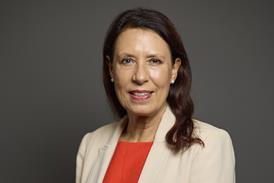









Paul Sweeting, president of the Institute and Faculty of Actuaries, calls for joined-up thinking on financial inclusion policy – including, of course, the importance of pension saving.

Towards the end of last year, the government published its Financial Inclusion Strategy. This rightly focuses on building resilience through a range of measures, including banking access, savings, insurance, credit and debt support. These are bolstered by proposals for compulsory financial education in primary schools.
However, pensions are noticeably absent from the core framework. This is despite the fact that pensions form the cornerstone of long-term financial security.
On the one hand, this separation makes sense, as the revived Pensions Commission and the State Pension Age Review are both due to publish key reports in 2026.
But treating pensions as a parallel process rather than an integrated pillar of financial inclusion misses a critical opportunity.
“Genuine financial inclusion hinges on connecting the dots. Rather than being a separate consideration, pensions should be at the heart of the overall approach.”
Paul Sweeting, IFoA
Saving enough starts earlier, not later
Without strong retirement provision, short-term resilience can falter in later life, leading to financial vulnerability. Supporting pensions also means supporting habitual, life-long saving.
The Institute and Faculty of Actuaries remains concerned that households in the UK are not saving enough for later life, that persistent gaps in retirement provision exist, and that action is needed to secure the long-term prospects of people in the UK. Pensions are only part of the solution, but an important part.
Genuine financial inclusion hinges on connecting the dots. Rather than being a separate consideration, pensions should be at the heart of the overall approach. This can be achieved through explicit measures to boost auto-enrolment coverage, tackle under-saving among low-income groups, and align payroll savings with pension pathways.
The UK can build an overall system where people are supported not just today, but for decades ahead.

Bringing these two agendas together now would offer the government its best chance of transformative change. If the Financial Inclusion Strategy is the overarching blueprint, then the Pensions Commission’s findings on adequacy and the State Pension Age Review can inform and shape the approach. Integration of this sort could turn two separate efforts into one powerful, coherent push for lifelong financial security.
Seizing this moment would enable cross-departmental synergy between the Treasury, the Department for Work and Pensions, and education bodies, fostering policies that address the full lifecycle of financial vulnerability.
The payoff is clear: higher pension participation among vulnerable groups, reduced long-term reliance on state support, lower inequality in old age, and a more trustworthy system that feels joined-up rather than fragmented.
In one joined-up framework, people get more than short-term financial fixes. They gain a real, reliable pathway to lifelong financial security.
Paul Sweeting is president of the Institute and Faculty of Actuaries.