









Former pensions minister Paul Maynard opines on Torsten Bell’s reappointment and what it means for the multi-faceted UK pension reform ‘roadmap’.

Do government ministers have interior lives? Do they dwell much upon what they do, or are they just caught up in a whirl of activity?
I don’t know Torsten Bell, so I can’t speak for what might be going on in his head. He may read this and burst laughing at my assumptions. But having lived through the uncertainty of multiple reshuffles myself, as part of a new government, it would only be human for him to have the mixed emotions of frustration at perhaps a hoped-for promotion not occurring – or relief just at survival after the cull of the Starmer-ites.
Relief is often less felt than frustration, until such point as you get that very early morning Downing Street call that signals the end is nigh, when you realise you should have felt that relief in past reshuffles. Ministers to be sacked are usually told before about 11am.
If a change in role was anticipated, it can be quite an anti-climax to walk back into the same private office in the same department to confront all the challenges you thought or hoped you might have left behind.
Yes, you will be pleased you can finish stuff you had started perhaps, depending on your level of enthusiasm for the brief to start with. But if ambition had left you dreaming of other briefs or more responsibility, you certainly need to reset your approach.
Torsten Bell’s next steps
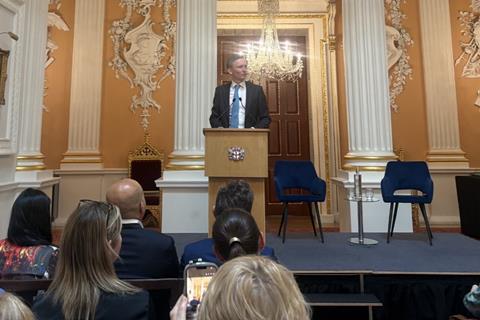
Whether Bell viewed his Mansion House speech of 13 July as likely to be his valedictory performance, we shall never know. He described it as a roadmap (binding his successor and cementing his legacy?), but was he aiming to be the driver?
In the absence of any comment from our new prime minister about pensions other than a commitment to the Triple Lock, Bell’s speech will have to be seen as the most up-to-date statement of intent.
What he set out was a necessarily complex process of building a pensions system that can accommodate the large range of incremental changes we have seen in the past 10 years.
We have had a Pensions Act, the passing of which was the easy part; the implementation of which will require effort to ensure all the moving parts interlock. Will that behind-the-scenes grunt be too boring for Torsten Bell? So much of it is ‘unglamorous’ that it can risk not getting proper ministerial oversight and drive.
Presiding over weekly updates on the backroom IT systems required to integrate a small pots consolidator into the dashboards may not seem the best use of time, but without it, these projects (and all future ideas requiring equally complex IT) will under-deliver.
Navigating Bell’s roadmap for reform
I have seen in both my rail and pensions briefs that political pressures for delivery don’t always coincide with civil service capacity or will. Synthesising the two is a hidden but necessary ministerial skill.
The convoluted – by necessity – sequence of tasks in the government document published alongside the speech demonstrates the complexity of this task. It will absorb the bulk of the operational bandwidth of the Department for Work and Pensions, leaving little time for ‘blue sky thinking’. I get told quite often that the civil service’s best ideas are on backburners as we go back to an era of ‘eye-catching initiatives’ and chin-stroking, moody photo-opportunities.
With so many individual steps in this timeline, many of which are publication dates for various consultations and guidelines, it can often also be difficult to see how the differing elements relate to each other, or how that which is ‘industry facing’ affects that which should be ‘customer-facing’.
Indeed, almost everything in that roadmap is industry-facing. Those saving for retirement, or already in retirement, do not see many obvious ‘outputs’ that deliver tangible benefits for them, notwithstanding the whole-of-system improvements we ought to see.
This risks perpetuating the sector’s problem of rarely allowing our customers metaphorically into the room when it comes to decision-making. This allows us to understand what they want, rather than what we see as best for them.
The unknown impact of the Pensions Commission

If that roadmap was, therefore, the ‘Haynes Manual’ for the operational side of his policy work, then the future vision remains contracted out to the Pensions Commission. Bell said he expected their final report early next year, and that he will “swiftly turn their recommendations into action”.
That sounds as though he has achieved the goal of all good ministers in ensuring your outsourced policymaking tells you only what you intend to do anyway. Otherwise, it is an unwise commitment to implement proposals you have never seen.
It is worth noting – and I hope to return to this in a future column – that the German government launched its own Pension Commission on the long-term sustainability of its system on 17 December 2025. It reported on 23 June 2026. Yes, six months. All 33 recommendations were accepted by the left/right coalition as a package, rather than piece-by-piece.
How the implementation of any such proposals from its British equivalent will affect this roadmap is still unpredictable. But with the minister back in the driving seat, reluctantly or otherwise, I suspect the autumn might be spent on putting more flesh on the bone in terms of how the government will seek to drive more investment into UK assets, with the Local Government Pension Scheme in the starring role.
Paul Maynard was the minister for pensions from October 2023 to July 2024, and served as the MP for Blackpool North and Cleveleys for more than 14 years.
Paul Maynard is also a panellist at the forthcoming Pensions Expert DC & Master Trust Summit on 22 September, where he will join First Bus’s Monty Hadadi and Vidett’s Alison Hatcher to discuss whether the pensions industry is delivering what members really need. You can view the full agenda here and register to attend here.