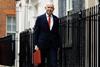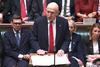
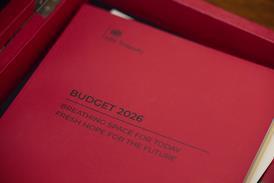











Financial markets remained sanguine following chancellor John Healey’s Budget speech as he pledged to maintain fiscal discipline and did not reveal any major surprise announcements.
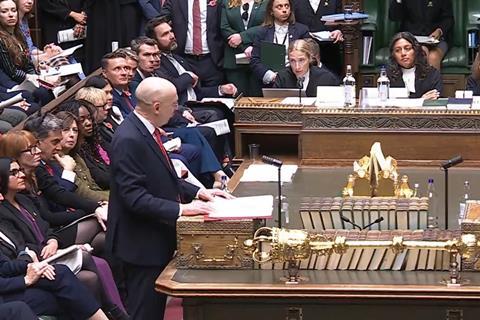
Gilt yields dropped slightly as Healey avoided big tax or spending increases. The Debt Management Office announced a small increase in gilt sales, up by £5bn to £251bn for the current financial year. Meanwhile, the FTSE All Share was flat, and the FTSE 100 index closed slightly higher, while sterling was largely unmoved against the US dollar.
Healey acknowledged the difficulties posed by ongoing conflicts in Ukraine and the Middle East, and pledged to give people “breathing space” while also preparing for future developments.
Chris Arcari, head of capital markets at Hymans Robertson, said that despite “limited room for manoeuvre”, Healey had stuck to Labour’s fiscal rules and so had not delivered a negative shock.
“However, the longer-term challenge remains,” Arcari warned. “Large unfunded spending commitments or a sustained increase in borrowing would risk putting further upward pressure on gilt yields…

“The government continues to face persistent spending pressures, while its manifesto commitments on the major taxes constrain the options available to raise revenue. The Budget announcements have therefore addressed some immediate pressures without resolving the UK’s more structural fiscal challenges.”
James Lynch, investment manager at Aegon Asset Management, said the chancellor’s speech was “light on policy”, which reassured investors and focused attention on gilt issuance, which was in line with expectations. “Future year borrowing numbers are increasing once again, which is slightly depressing, but all within market expectations,” he added.
An uncertain growth outlook
Kit Rees, investment strategist at Quilter, said the “tempered” market reaction signalled that the chancellor’s statement had “done its job to placate markets looking for evidence of fiscal credibility”.
The UK’s fiscal buffer has been eroded by higher borrowing costs, and while Healey said he aimed to rebuild this capacity, Rees said this would be “difficult to do unless something materially changes for the better”.
In addition, the Office for Budget Responsibility downgraded the UK’s growth outlook for 2027 and warned that economic performance was dependent on how the conflict in the Middle East affected inflation.
Quilter’s Rees added: “Today’s figures show the government has done well to eke out a decent level of growth this year relative to peers and the wider situation, but going forward it is going to be challenging to maintain that momentum.”
“While individual sectors have responded to specific measures, the broader market reaction has been limited, and we’ve seen nothing so far that would warrant significant changes to investment portfolios.”

Barry Jones, chief investment officer at Isio, said geopolitical and economic risks remained as sources of potential volatility, despite gilt, equity and currency markets being virtually unmoved by the chancellor’s speech.
“Overall, this has been a relatively uneventful Budget from an investment perspective,” Jones said. “While individual sectors have responded to specific measures, the broader market reaction has been limited, and we’ve seen nothing so far that would warrant significant changes to investment portfolios.”
Bank shares rose after Healey announced a temporary tax increase lower than had been expected, while housebuilders also ticked higher amid plans to increase the housing supply.
Gilt market ‘muted’ as issuance shifts
Peter Goves, head of developed market debt sovereign research at MFS Investment Management, said the gilt market had been “soothed by the ongoing commitment to the fiscal rules and although headroom was reduced, this is deemed understandable and tolerable”.
“The market reaction has been relatively muted, with some outperformance in the long end probably inspired by the small shuffle in the maturity split of the new revised gilt remit – which again incorporated only small changes. This was not a ‘dramatic’ Budget and not one that sparks market concerns.”
“With the Budget risk largely out of the way, gilt markets can refocus on inflation, the economic outlook and the path of Bank of England interest rates. The fall in yields is a positive initial verdict, although maintaining that confidence will depend on the government continuing to deliver against its fiscal plans.”

Bryn Jones, head of fixed income at Rathbones Asset Management, pointed out that the balance of gilt issuance was shifting towards shorter-dated securities, making a “strong technical argument” for longer-dated gilts to outperform.
Evangelia Gkeka, principal for fixed income strategies at Morningstar, said: “The bigger question now is what happens next. With the Budget risk largely out of the way, gilt markets can refocus on inflation, the economic outlook and the path of Bank of England interest rates. The fall in yields is a positive initial verdict, although maintaining that confidence will depend on the government continuing to deliver against its fiscal plans.”