









The Pensions Regulator (TPR) has urged trustees to rethink default pension design, warning that contribution patterns are more irregular than many schemes assume.
New analysis by TPR shows that a five-year career break taken within the first 10 years of working life can reduce a saver’s retirement pot by around 16%. Early career breaks remove contributions at the point when they would have benefited most from long-term investment growth.
In a blog published today, Patrick Coyne, director of strategy and communications at TPR, urged trustees to reflect these patterns when developing future default pension plans.
“Contributions pause, earnings vary, and caring responsibilities interrupt careers… our defaults need to reflect this.”
Patrick Coyne, The Pensions Regulator
“Working lives are uneven. Contributions pause, earnings vary, and caring responsibilities interrupt careers. These patterns are widespread and economically significant – and our defaults need to reflect this,” he wrote.
He added that early career breaks are “inherently an equity issue” and “a fairness issue”, noting that such interruptions are disproportionately taken by women.
Career breaks push one in three women into pension poverty

Research from Scottish Widows, published in November, found that by age 55 one in four women will have been out of work for more than five years, which could result in a £70,000 hit at retirement. Read the full article.
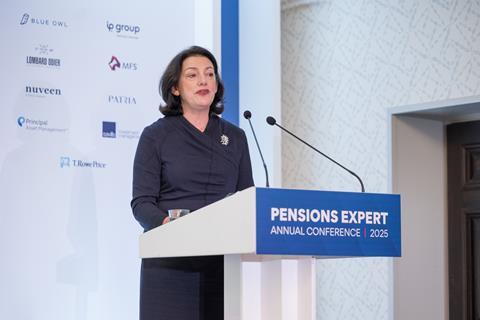
It is not the first time TPR has flagged pension adequacy issues. Addressing the Pensions Expert Annual Conference in November last year, the regulator’s chief executive Nausicaa Delfas issued a rallying call to the industry to help improve the UK pensions system for the millions of people who are under-saving or underprepared for retirement.
The Pension Schemes Bill and the ongoing work of the Pensions Commission have shifted the focus of the UK pensions system from building pots to delivering sustainable income in retirement. Coyne said the next phase of reform must concentrate on outcomes rather than participation alone.
He argued that trustees already hold much of the data needed to act. While default strategies are commonly structured by age through ‘lifestyling’, schemes could also consider cohorts based on contribution patterns.
“If the objective [of] pension saving is generating a sustainable income for savers, then strategy design must reflect systemic risk,” Coyne said. “Clearly, this does not mean individual tailoring at scale. But it does mean understanding your members and seeing if there are perhaps one or two defined cohorts, where modest differentiation could really make a difference.”
TPR said it will support secondary legislation with guidance to help schemes meet their obligations under the guided retirement duty, adding that innovation from providers will also play a role in shaping how retirement income solutions are delivered.