












The pensions minister has highlighted that trustees can consider using surplus capital to provide discretionary increases to members with benefits accrued before April 1997, as surplus release rules are taking shape.

The government published its final draft rulebook for its surplus release policy for defined benefit (DB) schemes this week. In his introduction to the document, Torsten Bell said: “How surplus is shared will vary from scheme to scheme and is a matter for individual schemes. Trustees will be able to negotiate these matters as part of discussions with employers, including considering the position of members whose pre-1997 pensions do not receive discretionary increases.”
DB scheme members who accrued benefits before April 1997 are not entitled to statutory annual inflation-linked increases on these benefits. This has led to some members with significant pre-1997 service experiencing a significant decline in purchasing power as inflation has risen.
Laura McLaren, head of DB scheme actuary services at Hymans Robertson, said: “It’s notable that the response acknowledges members whose pre-1997 pensions don’t receive increases. This is clearly an issue of significant public interest, with real consequences for those affected.
“There’s no set formula for sharing surplus, but the response points to guidance helping trustees give those members’ circumstances proper consideration. Ultimately, it’s about making well-informed decisions that work for the scheme, its members, and the employer.”
“Strengthening guidance to raise awareness and ensure discretionary increases on pre-1997 accruals are properly considered… provides the best balance between fairness to members, scheme affordability and long-term sustainability.”
Department for Work and Pensions
Surplus release and pre-1997 benefits
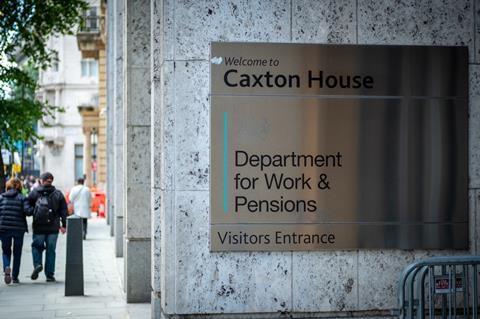
In its response to industry feedback, the Department for Work and Pensions (DWP) acknowledged that “the issue of discretionary pre-1997 increases is complex” and often dependent on the individual circumstances of different schemes.
The DWP stated that it “remains of the view that scheme-specific discretion, exercised within a strengthened governance framework, is the most appropriate approach to addressing issues relating to discretionary pre-1997 indexation”.
“Strengthening guidance to raise awareness and ensure discretionary increases on pre-1997 accruals are properly considered when decisions are made about surplus provides the best balance between fairness to members, scheme affordability and long-term sustainability,” the department said.
It said it had taken into account responses from member representative groups, trade unions, and other organisations, as well as considering issues related to the treatment of different cohorts of members within a scheme.
Members of several private sector pension schemes – including Hewlett-Packard, BP, and American Express – have campaigned for years to persuade these companies to allow discretionary payments for those affected by the pre-1997 issue, even taking the campaign to parliament.
Last year, some MPs backed an amendment to the Pension Schemes Bill that would have made it mandatory to consider pre-97 benefits when making decisions on surplus release. However, Bell rejected these efforts, saying they would not work.
While Bell has maintained that trustee boards should have the ultimate say on how surplus is used, the DWP and the Pensions Regulator have conducted research into how pre-1997 benefits are treated by different schemes to better understand the issue.
Members of the Pension Protection Fund and the Financial Assistance Scheme with pre-1997 benefits will begin receiving annual uplifts from January 2027, under rules introduced through the Pension Schemes Act.