









Governance reforms to the Local Government Pension Scheme have introduced an independent advisory position that could be well suited to professional trustees. As an important deadline approaches, is this an opportunity for professional trustees to further expand their reach? Pádraig Floyd reports.
As part of the government’s reforms to the Local Government Pension Scheme (LGPS), all LGPS administering authorities are required to appoint an “independent person” to their pension committee.
This new role places a named individual into a non-executive, non-political advisory role on the board to provide impartial expertise, constructive challenge and independent scrutiny to support both the pensions committee and the designated LGPS senior officer.
The role was introduced under the government’s Fit for the Future consultation and updated statutory governance guidance published by the Ministry of Housing, Communities and Local Government (MHCLG) with a deadline for appointment of 31 December 2026.
The 87 local authority pension funds across England and Wales have been busy recruiting to meet that deadline.
A new opportunity for professional trustees?
The independence requirement, as well as the need for someone with extensive knowledge of pension fund operations, has raised the prospect of professional trustees entering the local authority sector. Indeed, some LGPS funds have opted for a professional trustee to fill this position.
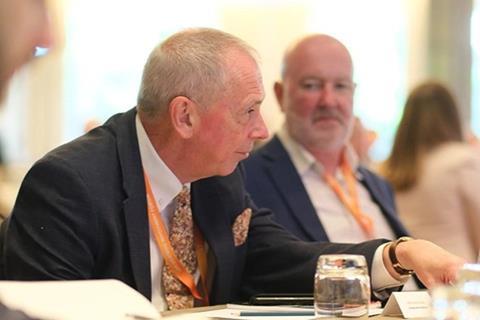
Jeff Houston, now an independent adviser, was secretary to the LGPS Scheme Advisory Board when the role of the independent person was first mooted.
While Houston believes that professional trustees are well suited to the role, he raises a couple of concerns that must be addressed. They would bring a level of independent expertise to pension committees and provide continuity and corporate memory as to why certain decisions were made, particularly after election results when boards turn over quickly. However, many lack extensive public sector and specifically LGPS experience.
“The role has expanded somewhat since it was first envisaged and encompasses more than just investment, to include governance and administration, both of which present challenges,” Houston says.
The other concern centres around the management of conflicts of interest: “Despite the guidance being clear on appointments, some trustee companies might see the role as a gateway to more work for the LGPS.”
Houston accepts that the nature of appointments and term limits might dissuade some from making such a connection. And if being appointed as one LGPS fund’s independent person prevents a professional trustee firm from taking on other, complementary work, it may decide that the appointment simply isn’t commercially viable.
Independent person roles are certainly not going to be as lucrative as actuarial consulting or other service provision, says Houston.
“Some of the fees I have discussed with funds are very much pitched at an individual, rather than at the level of consultancy fee structures,” said Houston. “So I don’t see many roles filled by consultants, because they may not get any other work with that client.”
Conflicts and learning curves
Stuart Travers, client director and member of the LGPS team at professional trustee firm Zedra, acknowledges that administration, governance, and investment are areas a traditional consultancy would seek to upsell, but he believes it would be very difficult for someone from an independent trustee firm to upsell anything other than themselves at this time.
“The independent person is a named individual, and though they will have support from their trustee business, there’s a very clear remit, and I don’t believe there will be much scope for the independent person to go beyond what’s already been set out.”

“The independent person is a named individual, and though they will have support from their trustee business, there’s a very clear remit, and I don’t believe there will be much scope for the independent person to go beyond what’s already been set out.”
Andrew McKerns, principal consultant at Hymans Robertson, says that while former heads of LGPS funds are uniquely well placed to fulfil the independent person role, he is also convinced that professional trustees would excel in that position.
“Anyone who’s interested will have to do their homework to have a real understanding about that wider LGPS landscape,” McKerns says. “But the LGPS will absolutely benefit from the quality of those independent trustees, offering a fresh pair of eyes on the internal machinations of their existing governance.”
That will present a steep learning curve, according to McKerns, but the broad experience a professional trustee brings to the table would far exceed any lack of knowledge in the short term.
“Often we speak to professional trustees and they may have a specific specialism – investment, governance, or legal, for example. But they work with a variety of different schemes that are involved in similar discussions and will bring that operational knowledge and expertise in supporting the committee.”
Clair Alcock, secretary to the Scheme Advisory Board at the LGPS, feels the funds that will be most successful in recruiting the right independent person will have done some real strategic thought beforehand around the gaps in their expertise and governance and how the culture of their committee will respond to the types of people they may be looking at.
“The independent person can provide a kind of corporate memory when you’ve got churn in the committee and in particular, the relationship between the independent person and the LGPS senior officer is going to be really important,” says Alcock.
“They’re not there to back each other up,” she adds. “We see the independent person creating a kind of LGPS ‘golden triangle’ with the senior officer and the committee chair.”
Entering uncharted territory

“Fundamentally, this is uncharted territory for the LGPS,” said Mandy Kaur-Sadler, a trustee director at Dalriada Trustees, who was appointed as the independent person for the West Midlands and Worcestershire pension funds earlier this year.
The underlying purpose of the reform is to provide independent expertise – impartial insight, challenge, and scrutiny, explains Kaur-Sadler. As a professional trustee, she sees things from many different perspectives, and all funds face similar issues.
“Each fund has its own governance frameworks, so they are trying to understand where that fits with the independent person requirement,” she says. “There is no one-size-fits-all.”
Though professional trustees have little experience with the LGPS, Kaur-Sadler believes there is a real opportunity to view the challenges through a different lens.
“When you look at what the role of the independent person is, that really is aligned with the work of a professional trustee,” she says.
This is particularly true within investment strategies. Local authority pension committee members are elected councillors, and so are politically motivated. This is where professional trustees may come into their own. Kaur-Sadler believes there is a real opportunity to make a difference, improve governance decisions and help the committee members make better-informed decisions.
“I can help councillors understand their fiduciary duties and leave personal beliefs at the door,” she said.

“There will be some very different objectives, especially around ESG (environmental, social and governance),” says Jeff Houston. “The objectives of the pool will be to get everybody into the same fund so they can invest at scale. The objectives of the local politicians will be to achieve something for their electorate and that may differ from the local ambitions of other member funds.”
Houston believes those who are successful in the independent person role will be those who can intermediate effectively between the various groups and better articulate the specific wishes of each fund to the pools.
“This involves working with the fund to create policies – like a local investment policy and an ESG policy – that the pool can implement, but still gives the local politicians what they need to go back to their electorate with,” Houston adds.
A brave new world
As yet, there is no formal mechanism to record who fulfils the role of an independent person. Alcock says the Scheme Advisory Board plans to form an independent person network, to better understand the different approaches and how they are working in the funds.
“The success of LGPS has always been in not being a one-size-fits-all organisation,” Alcock adds, “and there are some really welcome insights that those from the private sector and perhaps other unfunded schemes can bring.”
This is an edited version of an article that was originally published in the September edition of LAPF Investments. Click here to read the original article.