








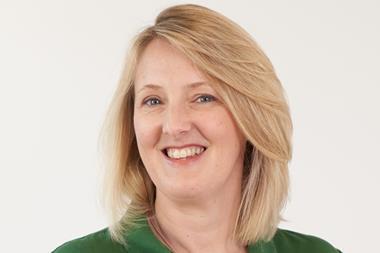


At a roundtable sponsored by T. Rowe Price and attended by Andrew Skeat, the asset manager’s distribution director, Pensions Expert’s editor Nick Reeve asked participants how they were preparing for change and whether the reforms would leave savers better off.
Participants
- Mel Duffield, chief pensions strategy officer, Universities Superannuation Scheme
- Muntazir ‘Monty’ Hadadi, head of pensions, First Bus
- Elizabeth Hartree, head of DC, Law Debenture
- Gary Smith, Trustee at now:pensions
- Ben Ward, head of investment policy, Nest Invest
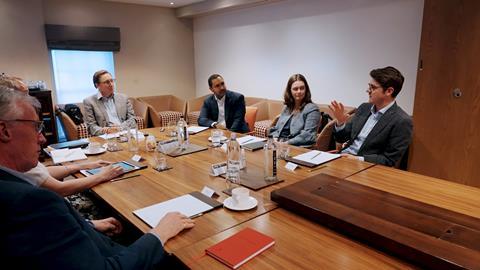
Pensions Expert (PE): How is your scheme preparing for the wave of changes coming your way?
Mel Duffield (MD): We’re at a crossroads, trying to understand what the full gamut of these changes means for our scheme. We’ve had assurance that we won’t be captured by the scale test because we’re not seen as a standalone commercial auto-enrolment arrangement. On the other hand, it seems that we are not exempted from the value for money framework.
With regards to small pots, I’m not sure how a deferred DC pot will be treated in a hybrid scheme where a member is still an active defined benefit members. On guided retirement, our members already have secure guaranteed income from the defined benefit (DB) section. For every one of these consultations, we have to understand what the policy intent is, and how it will apply to a hybrid scheme.
Gary Smith (GS): At now:pensions, we have over 2.5 million members. Many individual members do have sizeable pots but the vast majority do not and the average pot size at retirement is only about £2,500. The vast majority therefore take their pots as cash.
We are pretty comfortable with the scale test, not least because we’re part of the Marsh Group with their other workplace savings solutions, including the Mercer Master Trust. We are already investing in the same private markets vehicle as the Mercer Master Trust making use of scale, with now:pensions targeting five per cent in private markets which is expected to be achieved by the spring of next year, but we’re planning to go beyond that to achieve our Mansion House Accord ambition.
More interesting for us is guided retirement. At this point in time, providing an income for life is not really a burning issue in terms of member demand given small pot sizes. There’s no reason for us to be first to market but we will have a compliant solution by 2029. In the meantime, we’re much more likely to sit back, let the market develop a bit, and then explore our options.
Ben Ward (BW): We think industry consolidation will mean schemes are better governed with more specialised leadership. We recognise that, for most members, the state pension is probably going to be their primary source of income. How can we then adapt our investment strategy to add to that?
Our strategy, as we’re developing it, looks at where we can use insurance to give that confidence, but also provide the initial flexibility members want. Annuity prices are looking very good, so we also want an element of pragmatism.
Elizabeth Hartree (EH): [The schemes I work with are at] different stages. What I’m excited about is that we can look at that whole journey at last.
The unspoken thing in all of this is the adequacy issue, which for the vast majority of DC people is going to be a problem. I chair a non-commercial master trust, and one of the things we’re trying to grapple with is “what don’t we know?” We could look at what’s appropriate for the pot size. We can consult with our membership or try to get information about them. But we’re not providing financial advice.
Monty Hadadi (MH): As a smaller DC scheme, we’re almost having an existential crisis because there’s so much change coming up that we have to take advice on everything, which is expensive. We also have trade unions. They’re getting very interested in CDC. We have a legacy DB scheme, and that raises some interesting questions about how our DB and DC schemes might interact, particularly in relation to any surplus.
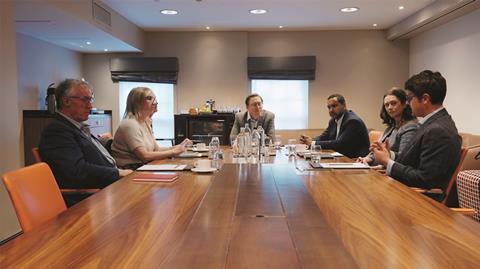
PE: Does the nature of your membership make choosing a decumulation option more difficult?
MH: Mostly, in the bus industry, it’s auto-enrolment minimums and qualifying earnings, so you have lots of small pots. If you look at it individually, you think it’s right to take cash. But if you bring them all together, you might have a sizeable sum, which maybe the dashboard will help.
GS: It’s very difficult, if not impossible, to work out, in aggregate, what the member needs are as individuals have different perspectives and goals. You can look at the profile of a typical member and pot size, but the bottom line is you don’t know what else they have. Cohorting members into different solutions based on set criteria will be helpful.
BW: I think you can get a sense of where people want flexibility and where they want certainty. One thing that really struck us is that our members don’t really see themselves as retiring.
You’ve got to find a way for the messaging to cater for that, with reassurance that they’re not trapped and there are plenty of options.
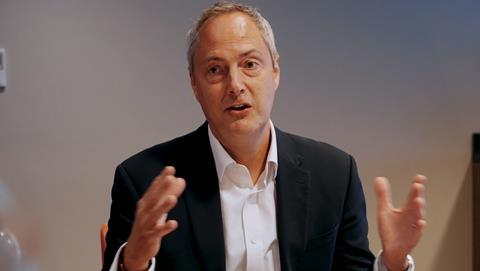
PE: Do we push to get people engaged, or build something that will be ready for them when they’re ready to engage?
EH: We’re about to have a generation retiring who have seen their parents retire from reasonably modest, sensible jobs and have a nice retirement. I think there is an expectation from the DC generation that this is what happens. Having guided retirement as the default, providing an income, is probably the only sensible thing to do.
MH: Even when people are engaged and want to do something, we don’t really make it easy because the fund names are like “World Future Fund B2”. Even with value for money, if people see their scheme isn’t performing, what can they actually do? Their employer has chosen the scheme for them.
MD: We recently surveyed our members, and I think something like 60 per cent said they had already used AI to think about their retirement planning.
One concern is that the combination of dashboards and value for money disclosure almost means we tip from members not having much information to potentially having loads of information, presented in ways they don’t always fully understand.
GS: We listen to live phone calls from the member helpline, particularly around retirement plans. There are people who ring in, and I wouldn’t say they’re not engaged. They know they’ve got decisions to make. They’re interested. They just really struggle to understand it.
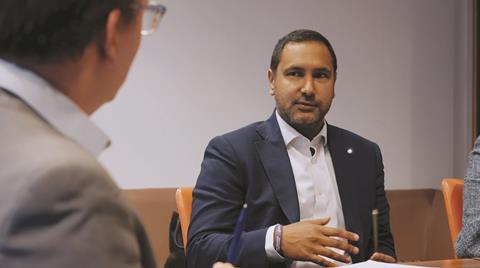
PE: How big is the risk that value for money comparisons pushes everyone towards the same investment approach?
GS: I am very supportive of the concept, but my concern is emerging in the detail. It’s almost universally focused on investment performance. There are a lot of other things that are very important and members value.
Many schemes have different investment strategies aimed at achieving different things, as they have different membership profiles, with different needs and priorities. They’ll have different performance during different periods and one is not necessarily any better or worse than another - they are just different, for the right reasons. That texture, I don’t think, is being considered or allowed for in the proposals. It will drive everybody towards the same strategy, irrespective of what members do or don’t need, which is contrary to where we started in terms of fiduciary duty.
MD: We’ve got about 25 per cent of our DC default fund invested in private markets, significantly above the ambitions set out in the Mansion House Accord, and because we believe it is in the long-term best interests of our members. So from the government’s policy intent of supporting investment in productive assets, we’re doing really well. However, there is a risk that through when it comes to investment metrics too much weight is placed on and recent short-term performance, which risks discouraging the long-term investment decisions and diversification that can benefit members over time
EH: It’s going to be harder to distinguish between schemes, and it’s arguably hard enough already. There’s no chance consultants are going to recommend somebody falling a bit behind.
BW: The horizon should be as long as possible. Having a comparative 10-year period allows more innovation in investment because you have a little more protection and can test things out.
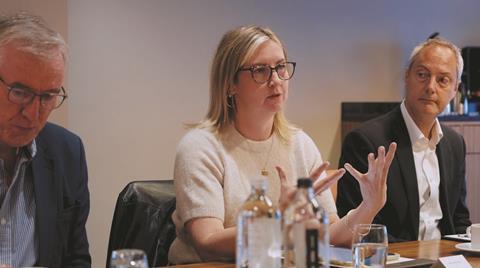
PE: How do we approach DC as a continuous journey?
MH: At the moment, trustees think of an accumulation phase, then someone decides to do something with the money, and it’s not really the trustees’ responsibility. One problem I’ve always had with DC is that when pots are biggest, that’s when you’re taking least risk. I understand why, but you’re missing out on the potential upside.
GS: I suspect life is more like a decision tree: when you get particular life events, you make decisions to go left, right or straight on. As we think about providing guided retirement, we need to think about when people go left to target cash or right to use the default drawdown solution. If they aren’t engaged to make their own decision, we’ll have to make a default available, or certainly nudge them in those directions. Probably based on fund size, which is the most obvious way of differentiating, but we will use other data if it’s available too.
EH: There is a risk of providers, very understandably, wanting to provide wraparound products with advice for wealthier cohorts. There are nice things offered at good cost for people with seven-figure pots and other assets. They absolutely deserve to have their money looked after properly, but they’re not the only people who need advice.
PE: Looking 10 years ahead, will members be better off because of the reforms?
MD: When we look at the full range of reforms, the risks to us seem a bit more on the downside than the upside. Trying to shoehorn a hybrid scheme into something designed to tackle the biggest groups of members at risk within the AE DC landscape may not be isn’t going to be beneficial and could even be harmful.
Both the Department for Work and Pensions and the Pensions Regulator are listening. But some issues concern how DB and DC benefits are integrated, or how the possibility of enforcement actions being applied would affect the entire hybrid scheme. We can’t just switch off a DC section or bulk-transfer out.
GS: There’s a lot of good stuff from a member perspective in these proposals and legislation. Greater transparency around assessing value is a good thing, for example. However, there are also things which risk being detrimental to member interest as well.
EH: There is definitely potential for members to be better off, partly as a result of the government’s agenda. Give them that credit. What I worry about is what the Pensions Commission will suggest, how it will be implemented, and whether the government will deliver its part of the bargain, which was to create an investable environment.
MH: There’s an affordability issue, a cost-of-living crisis. I think what’s missing is something aside from pensions: emergency savings. The sidecar idea is fantastic.