








Should we challenge accepted wisdom? Lewis Brown of the Association of Member Nominated Trustees asks whether recent geopolitical upheavals should lead more trustees to question long-held investment beliefs.
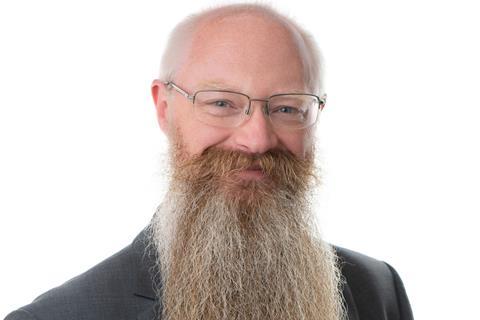
I recently had the pleasure of watching Sir Richard Shirreff speak at length about the geopolitical reality of the world we currently live in, talking us through the foothills of an emerging global conflict that we could all do with avoiding.
Sir Richard, who has previously held the role of Deputy Supreme Allied Commander for Europe in NATO, also managed to squeeze in a direct reference to Thucydides, something which the amateur classicist in me wishes more speakers would manage in pension conferences!
Putting references to the Athenian general and historian to one side, the point of Shirreff’s speech was to issue a call to the industry to actively engage in more lateral thinking. In the context of vigorous Russian aggression alongside the clear weakening of the American global hegemony, we all need to accept that those old assumptions that have underpinned pensions strategy for decades may no longer hold true.
As we navigate the next 10 years, it is absolutely critical that we all, and especially trustees, start to probe those assumptions differently and more deeply.
Challenging investment ‘norms’

Let’s look at one of those assumptions and break down what applying that thinking style might look like. Historically, gilts and US Treasury bonds have been seen as virtually risk-free with regard to the threat of any potential default, but those assumptions might need to be reassessed if we start to ask ourselves what ongoing geopolitical fragmentation could mean for these seemingly safer assets.
Have you ever asked your actuary what the outcome would be for a default on certain issues? Is the possibility even captured somewhere on a risk register, as unlikely as it may feel?
The point here isn’t necessarily that a UK sovereign default is now likely, but rather that trustees should periodically take the time to test assumptions that have historically been treated as effectively impossible. This kind of scenario testing isn’t about prediction; it’s about understanding the consequences and getting ahead of what your next steps would be if that risk manifested.
Here’s a possibly more controversial example of the effects of living in a more volatile world. Do stocks linked to the defence industry suddenly flip into counting as being ESG positive? Is it now the morally responsible choice to actively invest in these areas, both for expected return but also to attempt to sustain the democratic and economic stability that (I would suggest) most people in the UK and most members want to maintain?
It’s all a far more nuanced discussion than when we could feel smug around board tables agreeing that battleships should probably be kept off the books.

What other assumptions could we challenge here? How about fiduciary duty, the central pillar of our being, that whirlpool around which everything else revolves, our raison d’être? Surely this central tenet would remain inviolate and untouched?
Or would it? Already, the strings of productive capital play in the documents emerging from government departments, the weakening US hegemony leading the eyes of Westminster to focus inwards.
Perhaps trustees need to start planning for more overt state intervention in capital allocation, juggling a need to traverse quasi-policy paths while also ensuring required returns are met. Surely those juicy surpluses will come in handy here?
How trustees can help
You will be pleased to hear that not all is doom and gloom for trustees right now. Actively thinking issues through and scenario planning can not only lead to plans and mitigations, but more importantly, train the skills in responsive thinking you may need to navigate the real-world examples that will occur.
“Member-nominated trustees have a wealth of experience from outside of the baked-in preconceptions that dominate industry thinking, and they very often have ‘skin in the game’. In my mind, it’s never been more appropriate for trustees to move away from focusing on short-term market noise and to instead keep abreast of regime shifts and to gameplay structural scenarios.”

‘Red teaming’ and other trustee-focused exercises are critical, allowing trustees to directly experience the kind of difficult evolving situations that we should all expect to become ever more common in an increasingly volatile world.
If a lot of this sounds like we should all be playing ‘devil’s advocate’ more, then you’d be on the right track to the starting line. And who better to challenge and question these industry assumptions than member-nominated trustees?
Member-nominated trustees have a wealth of experience from outside of the baked-in preconceptions that dominate industry thinking, and they very often have ‘skin in the game’. In my mind, it’s never been more appropriate for trustees to move away from focusing on short-term market noise and to instead keep abreast of regime shifts and to gameplay structural scenarios.
Question accepted wisdom
There’s a lot to unpack when trying to shift the trustee mind into thinking laterally. Beset by industry assumptions and entrenched governing philosophies, one may be forgiven for simply looking to spruce up the old risk register with new mitigations.
I’d like to say now that I retired to my bookshelf and pulled down my own copy of Thucydides to find a suitable quote, but sadly, who has time for that nowadays? A quick internet search yielded the perfect excerpt from antiquity: “Most people, in fact, will not take the trouble in finding out the truth, but are much more inclined to accept the first story they hear.”
In an increasingly volatile world, trusteeship means taking exactly that trouble: questioning accepted wisdom, challenging comfortable assumptions and refusing to accept the first story we hear. A position that member-nominated trustees have been adopting for many a year.
Lewis Brown is vice chair of the Association of Member Nominated Trustees and a trustee of the Transport for London Pension Fund.