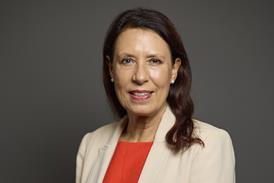
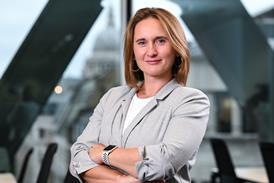
Former Australian pensions minister Nick Sherry and World Pensions Forum director M Nicolas J Firzli explain their new model for visualising the future of asset allocation as interest in private markets and productive finance increases.

We are living in the Age of Geo-Economics – defined by the second Trump presidency, the accelerating Sino-American technological rivalry, and the weaponisation of trade, finance and central banking – shaping the Fifth Industrial Revolution – bringing us artificial intelligence, advanced robotics, rare earth minerals, and small modular nuclear reactors.

These forces are fast transforming financial markets across asset classes and geographies. Pension fund CIOs and the investment managers who work for them are forced to reassess radically the way they invest. The ‘asset allocation of the future’ will need to incorporate new global geo-economic and country risk metrics that can help achieve deeper diversification, shield portfolios from sudden external shocks, and obtain higher risk-adjusted returns.

The new approach we present will also help incorporate, co-opt, and, in some instances, ‘pre-empt politely’ some of the pressing demands arising from civil society, national and local governments, who are eager to ‘steer’ more long-term capital towards economic development endeavours and environmental resilience – without always taking pension returns into proper consideration. Pension scheme trustees must remain the ultimate arbiters at all times.

Global, connection, technology, world

Source: Shutterstock

Our Modern Asset Allocation Mapping, or MAAM, will be presented in more detail later this year during the International Monetary Fund and World Bank Spring Meetings from 13 to 18 April 2026.

The simplified version presented in this editorial allows pension CIOs and trustees to consider their asset allocation options into four broadly defined categories or quadrants:

  • listed, global blue chip companies and government bonds, including Nasdaq giants and their rivals in the Shanghai CSI A100 index, for example;
  • listed local and regional assets, such as FTSE 250 companies and municipal bonds;
  • large private markets assets, such as stakes in airports or subsea natural gas pipelines; and
  • local private assets, which often have a strong energy and environmental component.

Mapping asset allocation in the age of geo-economics

Click the top left symbol to enlarge.

The yellow and green arrows represent likely investment pathways. For example, an increasing number of UK and European pension funds will probably allocate more through venture capital investment vehicles to local technology start-ups associated with regional university centres of excellence. The West Midlands Pension Fund, for instance, is backing debt funds focusing on new tech companies related to the University of Birmingham’s School of Engineering.

“Deglobalisation and changing social and cultural dynamics are likely to convince more trustees and asset owners of the need to invest domestically, closer to home.”

M Nicolas J Firzli and Nick Sherry

In a similar vein, the West Yorkshire Pension Fund has recently invested in Rebalance Earth, a new UK-based asset manager focusing on investment in ‘nature as infrastructure’, including wetlands, forestry, and oyster reef restoration projects.

Deglobalisation and changing social and cultural dynamics are likely to convince more trustees and asset owners of the need to invest domestically, closer to home – funding local technology champions and regional ecosystems, while hiring and benefiting local citizens.

The consequence of the above interrelated factors is a gradual shift to a new investment blend away from cash and bonds – an ironic trend, given that the world is awash with bonds as a consequence of high government debt.

Therefore, we expect a greater focus on diversified private equity and infrastructure, which provide listed equity-like returns without the volatility. This will include strategic energy assets like small modular nuclear reactors, giant mobile batteries, new rare earth element mining and refinement capabilities, thoughtful investment in agriculture, nature restoration and national defence assets. These trends are emerging slowly but surely, with Australian and Canadian pioneers showing the way.

Our upcoming Spring Meetings presentation in Washington DC on 16 April 2026 will further explore these new ideas, showing how they can also help attain deeper diversification across sectors and geographies in an increasingly fractured and volatile world economy.

M Nicolas J Firzli is executive director of the World Pensions Forum and co-founder of the World Bank/G20 Global Infrastructure Facility. Nick Sherry is co-chair of Australia’s Team Super and a former pensions minister in the Australian parliament.