









Pension scheme trustees should make continuous professional development a priority as pension schemes face an increasingly complex regulatory and operational landscape.
That’s according to panellists at the Pensions Management Institute’s (PMI) annual conference in London earlier this month, who argued that trustee capability must evolve beyond technical knowledge to include stronger decision-making, leadership and behavioural skills.
A panel discussed the challenges faced by trustees as they grapple with a wave of change across the pensions sector, including the government’s newly published surplus consultation, the forthcoming Value for Money framework, and consolidation across defined benefit (DB) and defined contribution (DC) schemes.

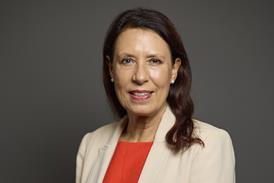
Mike Weston, a professional trustee at Pi Partnership, said trustee capability had improved significantly over recent years but warned that consolidation could bring about further shifts.
He said: “Overall, the industry is more capable than it used to be. But if you step back and look at DB schemes consolidating through risk transfer, DC master trusts becoming larger and fewer in number, and LGPS pooling, logically, there will be fewer trustees going forward.”
Weston added that there was a challenge in attracting people into trusteeship, as establishing it as a viable long-term career would prove more difficult amid structural changes.
Confidence and soft skills
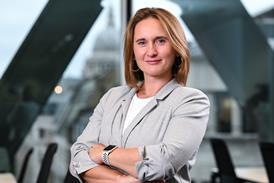
Rachika Cooray, partner and head of governance at LCP, said technical knowledge is just a “starting point” for effective trusteeship.
She said: “Trustee capability has shifted quite a lot. Technical knowledge is almost the baseline. Trustees are operating in a new ecosystem where influence is increasingly concentrated among a relatively small number of advisers, asset managers, fiduciary managers and professional trustees.”
Cooray said strong trustee boards require the right mix of skills, an inclusive culture, confidence in decision-making, and the ability to challenge advisers effectively.
“Soft skills really matter: communication, strategic thinking and creating an environment where different voices can contribute are increasingly important,” she added.
Accreditation and standards
The panel also discussed proposals around trustee accreditation and minimum standards, with the Department for Work and Pensions’ consultation on trustee effectiveness ongoing.
Weston strongly supported formal accreditation, arguing that the pensions sector remains an outlier compared with other areas of financial services. “What other financial services profession doesn’t have formal accreditation and qualifications?” he said. “As the demands on trustees increase, accreditation and a trustee register are logical developments.”
“Capability isn’t something you achieve once. It needs to evolve alongside the industry.”
Rachika Cooray, LCP

Cooray suggested a tiered approach, with higher expectations for professional trustees, trustee chairs and those overseeing more complex arrangements such as collective defined contribution schemes and superfunds.
The speakers also highlighted the importance of ongoing learning. Weston questioned whether existing continuing professional development requirements were sufficient given the pace of change facing the sector.
Cooray urged schemes to integrate training into regular board activities rather than treating it as a standalone exercise.
“The best boards build learning into the rhythm of their governance processes,” she said. “Capability isn’t something you achieve once. It needs to evolve alongside the industry.”
Despite concerns about the future size of the trustee population, both speakers remained optimistic about attracting new talent into pensions
“Pensions are never dull,” Weston concluded. “There’s always something new to learn.”