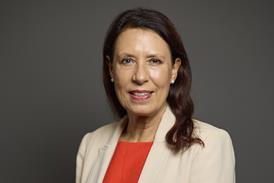
Paul Sweeting, president of the Institute and Faculty of Actuaries, responds to the Pensions Commission’s interim report and highlights crucial areas for the commissioners to consider.

Paul Sweeting, IFoA

Paul Sweeting, IFoA president

The Pensions Commission’s interim report marks a pivotal moment for the UK pensions system. Not since the original Turner Commission in 2005 has there been such a comprehensive, high-level review of retirement savings adequacy.

With automatic enrolment now well established, the spotlight has rightly turned to a tougher question. Are contribution rates, scheme designs, investment strategies and state support sufficient to deliver genuine financial security in retirement?

In a previous article for Pensions Expert, I argued that true financial inclusion must also mean pensions. Here, I explore what that means in practice. This means examining the urgent adequacy challenges facing the Pensions Commission and arguing that an actuarial perspective can help inform the difficult choices ahead.

The urgent adequacy issue

The challenge is clear and increasingly urgent. While participation has soared, far too many savers remain on track for retirement incomes that will fall significantly short of the replacement rates needed to maintain living standards.

Government analysis shows that, without reform, retirees in 2050 are on course for around £800 (or 8%) less annual private pension income than those retiring today in real terms.

“Getting the risks, trade-offs, and policy choices right is not optional but essential if the next generation of retirees is to enjoy financial security.”

Paul Sweeting, IFoA

Although the impact on outcomes stretches far into the future, action is needed now. Long-term modelling shows just how sensitive retirement outcomes are to contribution levels, investment returns, and working patterns.

Additionally, Pensions UK analysis finds that over half of savers are currently on course to miss the retirement income targets set by the original Pensions Commission.

Retirement Living Standards show savers face ‘cliff edge’

Wallet, bills, cash, adequacy

Only 23% of workers will achieve a moderate retirement lifestyle with current contribution rates, according to Pensions UK research, building on its influential Retirement Living Standards. Read the full story.

The Institute and Faculty of Actuaries’ (IFoA) work on pension gaps demonstrates how experiencing common life events such as career breaks for caring responsibilities, periods of part-time work, self-employment, or lower earnings can have a profound impact too. These interruptions, which affect millions, compound over decades and can turn seemingly adequate saving rates into substantial shortfalls by retirement.

Tough choices ahead

Directions, choices, options

Any serious attempt to close the adequacy gap will require tough choices.

Actuarial modelling helps show what choices really mean in practice – whether to save more today and accept lower take-home pay while the cost of living remains high, to rely on individual pension pots that leave savers fully exposed to market volatility, or to adopt collective schemes such as collective defined contribution (CDC) that can deliver more stable retirement incomes. Even how decisions on state pension age, auto-enrolment, and tax relief will impact different generations.

From an actuarial perspective, I hope that the Pensions Commission will give particular attention to the following areas as it develops its final report in 2027:

  • Prioritising long-term modelling of policy options across a range of economic and demographic scenarios to test their resilience;
  • Quantifying and presenting the key trade-offs (contribution levels, risk sharing, intergenerational impacts) explicitly so that choices are transparent and evidence-based;
  • Supporting practical measures that address real-life risks, including more flexible auto-enrolment for those with career breaks, clearer default decumulation pathways, and wider use of collective schemes such as CDC, where they can improve outcome stability;
  • Ensuring strong coordination across the current wave of pensions reforms to avoid unintended consequences and maintain saver trust; and
  • Protecting the core building blocks of the system (regular contributions and tax incentives) while introducing targeted improvements.

The Pensions Commission now faces a defining moment. Getting the risks, trade-offs, and policy choices right is not optional but essential if the next generation of retirees is to enjoy financial security.

It is no exaggeration to say that the decisions made over the coming months will shape retirement outcomes for decades to come.

Paul Sweeting is president of the Institute and Faculty of Actuaries.