









Members of the House of Lords have tabled a series of amendments to the Pension Schemes Bill challenging the government’s ‘mandation’ clause.
It comes as the bill is set to be scrutinised by members of the House of Lords in the committee stage, beginning on 12 January.
Baroness Sharon Bowles, a Liberal Democrat peer, has proposed several amendments designed to remove the mandation clause. Conservative peer Baroness Deborah Stedman-Scott has put forward a similar amendment to remove the mandation power.
During a debate on the bill on 18 December, several peers voiced concern about the mandation clause and its impact on fiduciary duty.
Baroness Stedman-Scott called the mandation reserve power “the quiet nationalisation of pension investment strategy”.
“Pension schemes exist to serve savers, not to serve the shifting political priorities of the day.”
Baroness Stedman-Scott
“At stake here is trustee independence and fiduciary duty, principles that sit at the very heart of pensions policy,” she continued. “Trustees are bound, both legally and morally, to act in the best financial interests of their beneficiaries. Pension schemes exist to serve savers, not to serve the shifting political priorities of the day.”

Baroness Bowles said: “It is undeniable that the government has opened a Pandora’s box by taking the power of mandation, even if it is intended as a reserve power. I happen to think it is about time Pandora’s box was opened, emptied and hope allowed to get out, at least on interpretation of fiduciary duty. However, it is essential that this be done in primary legislation. Regulatory guidance or a statutory instrument is not enough.”
Baroness Stedman-Scott also challenged pension minister Torsten Bell’s assertion that the power sought to address a “collective action problem” that was creating a barrier to domestic investment.
Baroness Stedman-Scott argued: “Low domestic investment is not simply a collective action problem, as the government suggests. It reflects real structural barriers, and the government should compile the relevant evidence and report back on how those obstacles might be removed.”
Conservatives rally against mandation clause
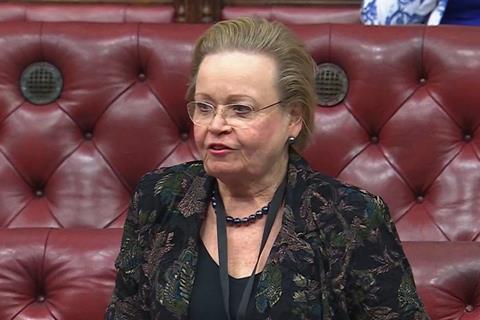
Several Conservative peers added their voices to those opposing the mandation clause. Baroness Sheila Noakes likened the drafting of the clause to “a horror story”, and pledged to scrutinise the power during the committee stage.
Baroness Joanna Penn challenged the government to address barriers to domestic investment. “There is a lot of detail to be looked at with regard to how the mandation powers will work, as well as the principle of them,” she added.
Lord Nick Bourne argued that “government-dictated investment risks undermining trustees’ fiduciary duty and risks distorting markets”, a view echoed by Viscount James Younger.
“It is undeniable that the government has opened a Pandora’s box by taking the power of mandation.”
Baroness Bowles
“Mandation risks inflating asset prices if multiple funds are required to allocate to the same asset classes at the same time,” Viscount Younger said. “Markets may also interpret government direction as an implicit signal of future price support, potentially amplifying distortions rather than improving capital allocation.”
Labour attempts to reassure on safeguards
Baroness Maeve Sherlock, who is leading the Pension Schemes Bill through the House of Lords, reiterated that the government did not anticipate using the mandation reserve power “if all goes well”.
She also sought to reassure peers that there were “a series of safeguards” and a requirement for consultation and reporting to help shape how mandation would work in practice.

Baroness Sherlock also cited the “savers’ interest test”, which would allow pension providers to circumvent the mandation clause if they can prove it would lead to material financial detriment to savers.
The mandation clause, which attracted much criticism from the pensions sector last year, would give the government the power to mandate investment allocations for pension schemes subject to Value for Money assessments – predominantly defined contribution schemes.
It currently has a ‘sunset’ provision that would cause it to expire at the end of 2035 if not enacted, and senior government figures have repeatedly stated that they do not envisage the power being used.