












Master trust Nest has put more money to work through its partnership with IFM Investors, seeding an infrastructure credit fund with a focus on climate technologies.
The £50bn defined contribution (DC) fund took a 10% ownership stake in IFM early last year with the aim of making significant allocations to UK and global infrastructure.
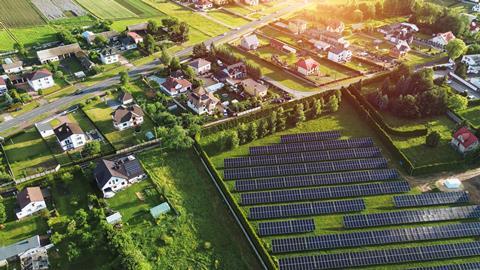
In a press release today (2 June), Nest said it had committed £200m to invest in “next-generation climate technologies”, seeding an infrastructure-focused global growth credit strategy. The investment will support “innovative projects and companies that are believed to be well positioned to benefit from the transition to a lower-carbon economy”, the master trust said.
“This investment is also putting members’ money to work in ways that move the dial on climate actions – a clear ‘win-win’ for both our members and the wider market.”
Rachel Farrell, Nest Invest
The mandate is “complemented by a robust UK pipeline”, Nest said.
Rachel Farrell, director of public and private markets at Nest Invest, said the mandate represented a “compelling opportunity”, adding: “Alongside financial returns, this investment is also putting members’ money to work in ways that move the dial on climate actions – a clear ‘win-win’ for both our members and the wider market.”
Nest bought the stake in IFM Investors last year, becoming the first non-Australian owner of the asset management group. IFM was set up and is owned by Australian superannuation funds.
The UK master trust aims to invest around £5bn through IFM by 2030, as part of its wider plan to allocate 30% of its portfolio to private markets, up from 18%. It has already invested £450m in a European infrastructure fund launched by IFM a year ago, and £500m in a global infrastructure fund announced in October.
Rich Randall, global head of debt investments at IFM Investors, said: “Building on IFM’s global infrastructure debt platform and decades of experience financing essential assets, this mandate expands our focus to innovative infrastructure and industrial technologies that support economic resilience, energy security, and supply chain strength.”
IFM will invest in asset-backed debt across sectors including power and energy, sustainable transportation, the “digital circular economy” and industrial innovation sectors, Nest said.