









Policymakers and financial institutions are underestimating climate risks that could undermine the global financial system, according to a new report from the Institute and Faculty of Actuaries (IFoA) and the University of Exeter.
The 31-page report, ‘The Parasol Lost’, suggests that failing to account for accelerating global warming raises the risk of climate-driven inflation, financial shocks, and the withdrawal of insurance from high‑risk areas much sooner than many expect.
This, in turn, increases the chance of widespread financial instability and what the report terms ‘planetary insolvency’, which is the risk of societal and economic collapse from the loss of nature’s critical support systems.
Economic impact ‘underestimated’
The report also highlights that previous research into the economic impact of climate change has underestimated the effect on economic growth.
Previous estimates have put the impact on GDP at a 2.1% decline if global average temperatures rise by 3°C relative to pre-industrial levels, or 7.9% if temperatures rise by 6°C.
However, the IFoA and University of Exeter contended that previous methodologies “excluded many of the most material risks”, including sea levels rising, nature degradation, and impacts on health. A more recent analysis from the UK’s Climate Financial Risk Forum suggests a “plausible, severe combined climate and nature shock scenario” could lead to a global economic contraction of between 15% and 20%.
In his foreword to the report, Sir David King, founder and chair of the global Climate Crisis Advisory Group, said: “To avoid planetary insolvency, policymakers must urgently implement a fundamental, policy-led change of direction, informed by up-to-date information on what is happening, what is likely, the risks associated with ongoing global warming and a willingness to address the root causes of the problems we face.”
Emergency action required
Actuaries and scientists are now calling for emergency action – a “planetary solvency” plan – to avoid extreme climate impacts that could undermine the global financial system and cause catastrophic human, societal and economic impacts.
“The stark findings of this report highlight the urgent need to continue working… to help address the root causes of the climate crisis and safeguard the wellbeing of all communities.”
Paul Sweeting, Institute and Faculty of Actuaries
Paul Sweeting, president of the IFoA, said: “Actuaries specialise in understanding and managing risk, and the cooperative spirit of our profession drives us to serve society as a whole.
“The stark findings of this report highlight the urgent need to continue working in partnership with policyholders, governments, scientists, and other key stakeholders to help address the root causes of the climate crisis and safeguard the wellbeing of all communities.”
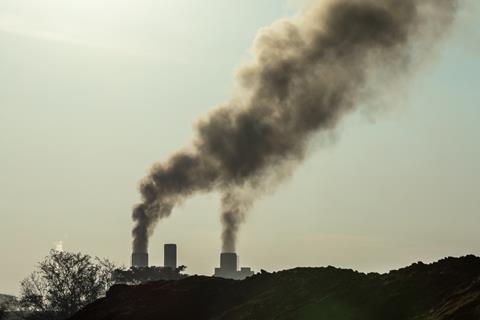
Central to the report’s warning is the loss of the ‘hidden sunshade effect’. For decades, air pollution has masked around 0.5°C of global warming through aerosol cooling, according to the report. As pollution is reduced, particularly under tighter shipping regulations, this cooling effect is rapidly disappearing and exposing faster-than-expected temperature rises.
The pace of warming may be further amplified by the Earth’s sensitivity to greenhouse gases being higher than previously estimated, the report stated. As a result, global temperatures are now likely to reach 2°C before 2050, which is a level linked to severe disruption of food and water systems, worsening health outcomes, and large-scale migration.