









Institutional investors, including major UK pension providers, have collaborated on a ‘blueprint’ to drive positive change in the mining sector ahead of the COP 30 conference in Brazil.
The Church of England Pensions Board is among the international group of investors, known as the Global Investor Commission on Mining 2030, which is calling for changes to how miners and related companies operate. The initiative is aimed at improving safety and addressing environmental impacts.
Members of the commission met Brazilian president Lula da Silva and other politicians last week, ahead of his country hosting the environmental conference, and presented the commission’s recommendations.
The group has set out a 10-year plan for all mines to achieve best practice standards. The recommendations include establishing an independent monitoring agency and a funding system to help address issues after a mine has closed.
“The commission sets out a compelling and practical vision… to level the playing field for a responsible rules-based mining system.”
Adam Matthews, Church of England Pensions Board
Other providers supporting the initiative include Legal & General, Royal London Asset Management, and Sweden’s national pension funds. They are joined by asset managers PIMCO and Ninety One, as well as Dutch financial services company ING and Orion Resource Partners, an investment firm specialising in sustainability for the metals and minerals sector.
The initiative is also backed by the Principles for Responsible Investment, a $128trn (£97trn) global investor network.
A seven-year stewardship journey
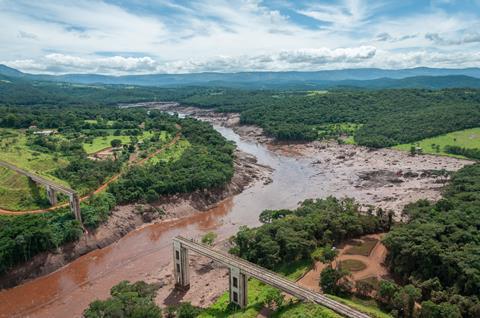
The Church of England Pensions Board has led a long-running campaign to raise standards in the mining sector, prompted by the 2019 Brumadinho disaster in Brazil.
A “tailings” dam – built to hold waste materials from a nearby mine – owned by mining giant Vale collapsed in January 2019, and the subsequent flood killed more than 250 people and caused significant damage to agricultural land.
The Church of England collaborated with Sweden’s Council on Ethics, which sets the responsible investment policies for the country’s £173bn national pension system, on stewardship relating to mining companies to improve safety standards in the wake of the disaster.
In 2023, the organisations launched the Global Investor Commission on Mining 2030, chaired by the Church of England’s chief responsible investment officer Adam Matthews.
Encouraging positive action on mining
In a statement, the Global Investor Commission said its work was designed to “level the playing field for responsible mining operators to meet global mineral demand”.
The commission also challenged other investors to “create long-term value by driving up sustainability standards across the mining industry while tackling short-termism that incentivises unsustainable mine practices”.
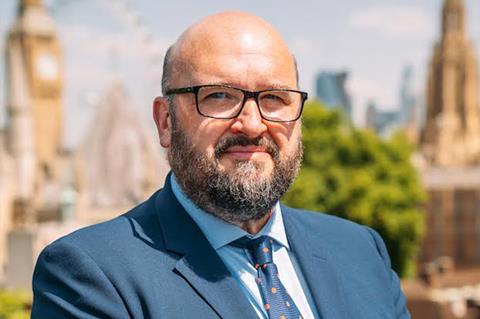
Matthews said: “The market is at an inflection point. We can choose to support a vision of responsible mining that addresses the industry’s systemic challenges, which in turn would enable long-term value generation. Or we can allow the digital and clean energy system of tomorrow to be born of social discord and environmental breaches.
“The commission sets out a compelling and practical vision, involving a partnership of governments, companies, investors, workers and other community stakeholders to level the playing field for a responsible rules-based mining system.
“This vision, driven by the long-term interests of companies and investors, will deliver real, meaningful benefits for local communities as well as for national economies.”
Fredric Nyström, head of sustainability and governance at AP3, one of Sweden’s national pension funds, added that the mining sector was “fundamental to the global economy, and central to the energy transition”.
While institutional investors want exposure to the mining sector’s growth potential, Nyström emphasised that social and environmental risks needed to be managed responsibly.
The commission expects to hold further discussions with the Brazilian government and other governments about its proposals.
The COP 30 conference begins on 10 November in the Brazilian city of Belém, and lasts until 21 November.
The Global Investor Commission’s 2035 goals
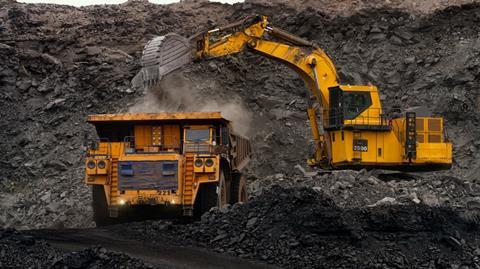
Investors involved in the commission agree that the mining sector is vital to the transition to a low-carbon economy, as many of the technologies involved will require raw materials such as cobalt and copper.
As commission chair Adam Matthews said in today’s (3 November) announcement: “To meet future demand – and ensure a model of mining where sustainability risks such as health and safety, community engagement and environmental performance are managed to the highest global standards – investment alone is not enough.
“A compelling vision and partnership are needed, and a humble recognition that only by owning the challenges together will we enable the best model of mining to become the norm.”
The Global Investor Commission on Mining aims to “consolidate market expectations of mining companies” and take into account the important role of companies that use raw materials, such as vehicle manufacturers, technology companies, and agricultural firms.
The commission has set out seven goals to encourage improvements in mining standards. These cover resilience, performance standards, responsible sourcing, regulatory frameworks, engagement practices, addressing historical issues, and reducing conflicts.
The investors said environmental, social and governance (ESG) data providers should “adopt more nuanced assessments” for the mining sector and should aim to avoid penalising the industry automatically through their metrics.
The commission also called for the creation of an independent International Minerals Agency to monitor the industry and help generate best practices standards.